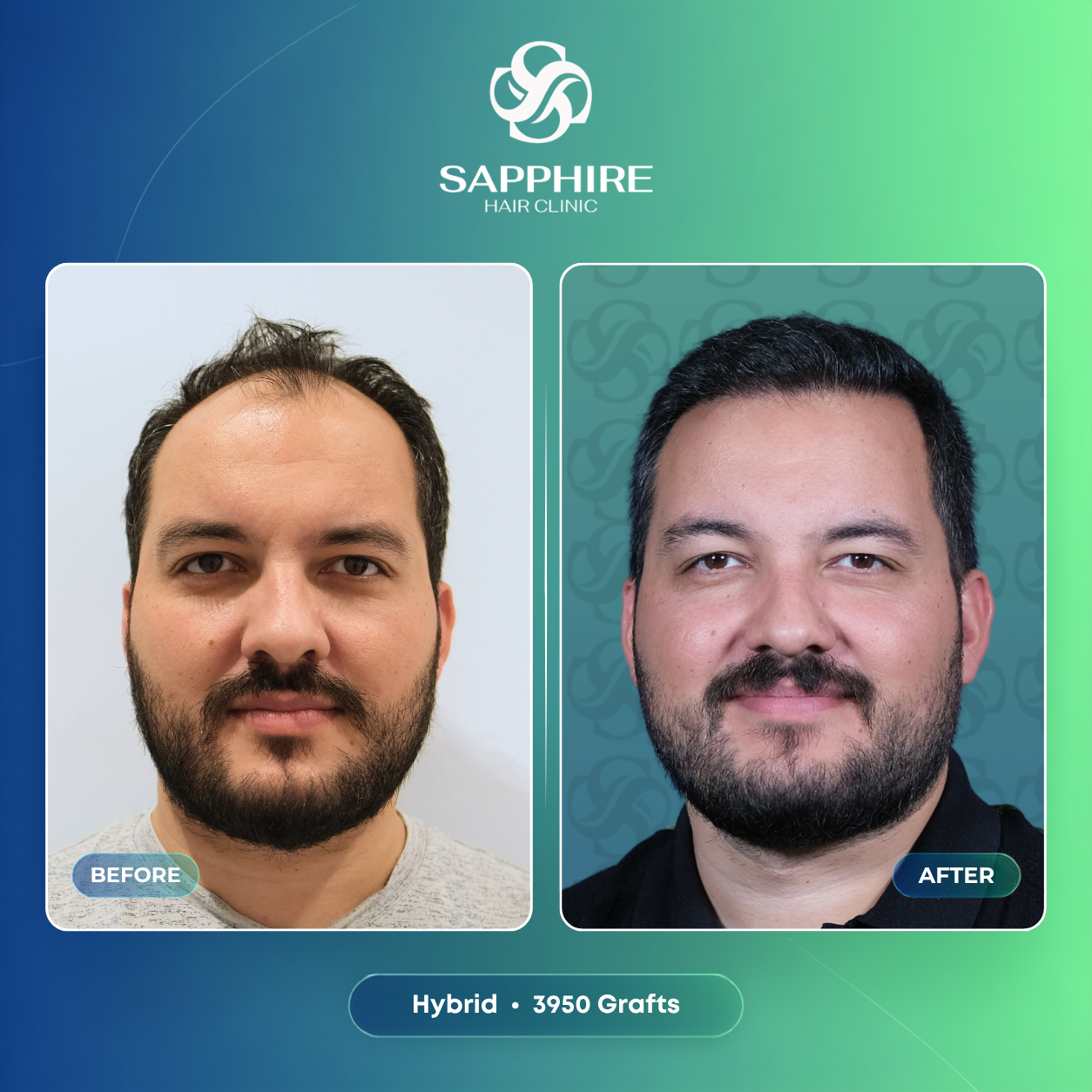
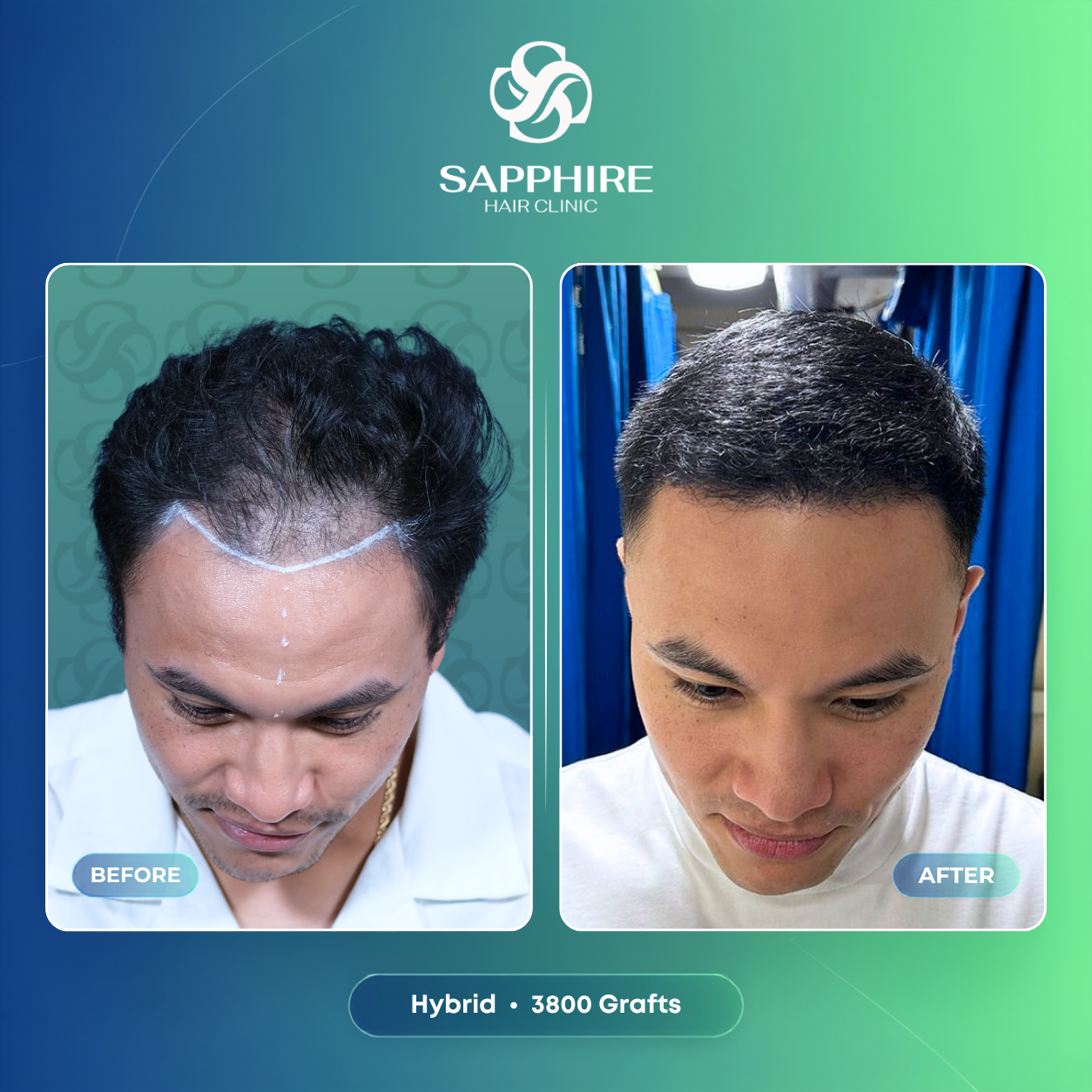
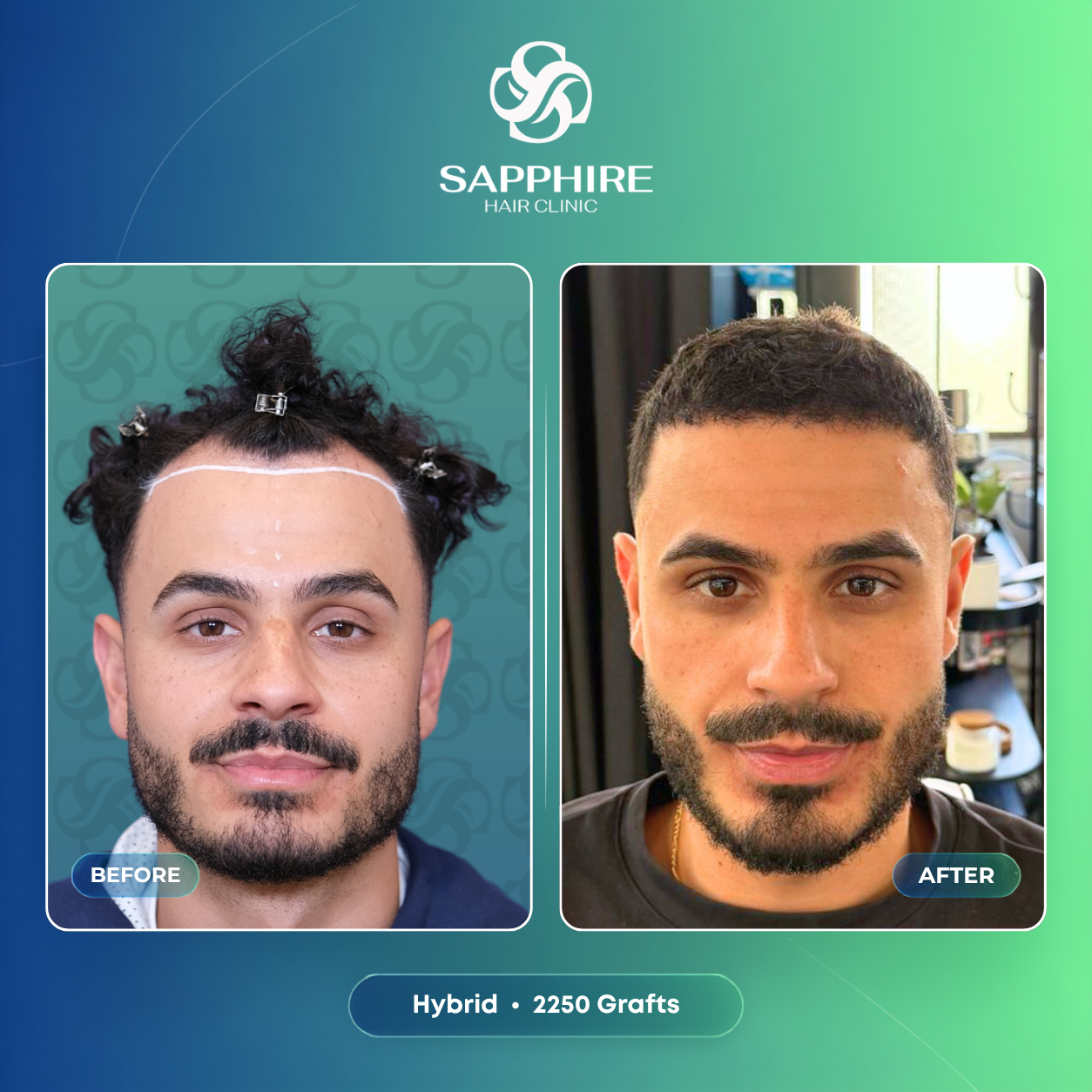
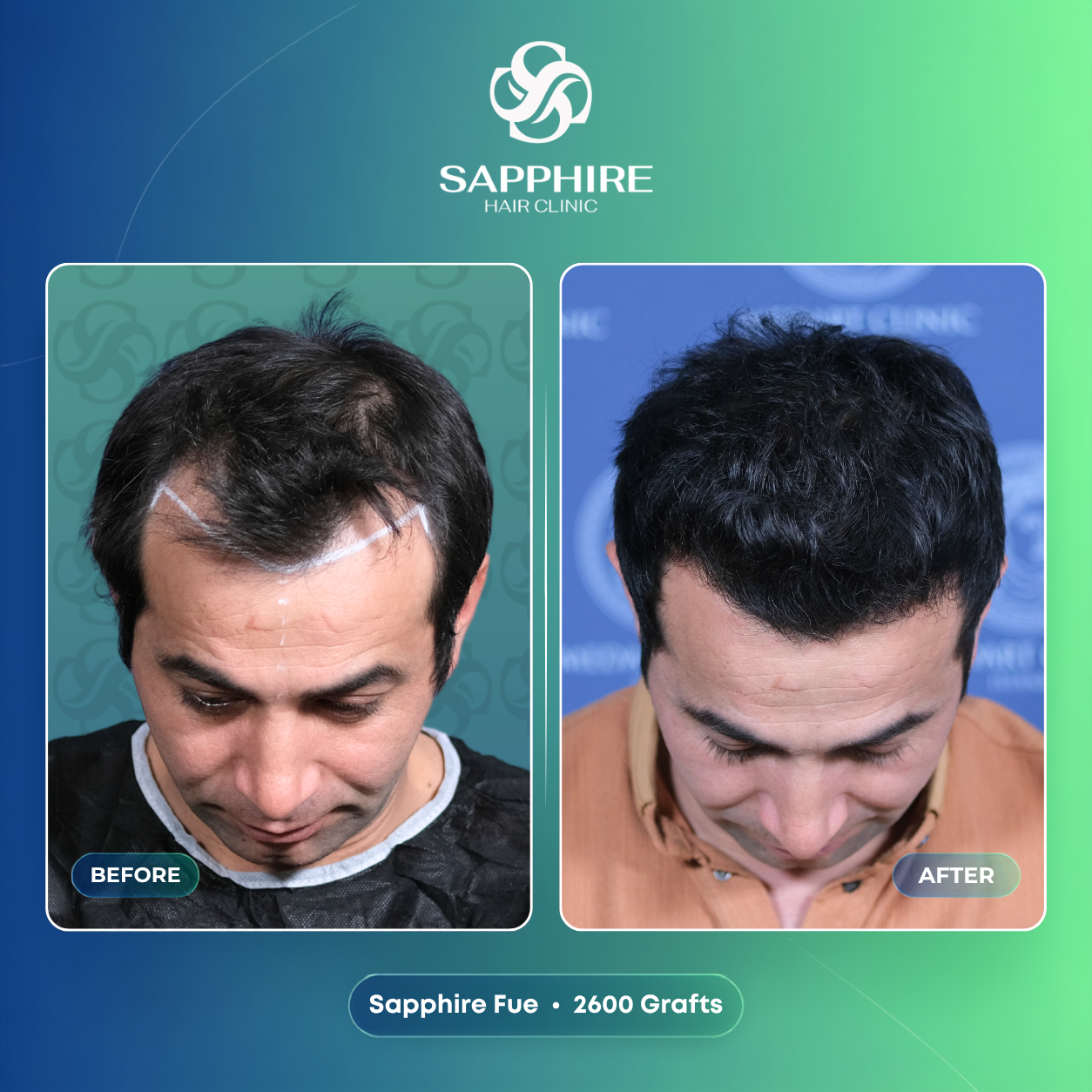
Hair Transplant Before and After
Hair Transplant Before and After, Men have a genetic disposition to hair loss, but many women experience female pattern baldness, too. Apart from hereditary factors, both men and women can lose hair due to hormonal changes, illnesses, certain medications, stress, and poor hair care (e.g., using hair products with strong chemicals and wearing tight ponytails and braids).Fortunately, women and men can get a hair transplant that will hold up over the long term, and the best place to get it is in Turkey.In Turkey, hair transplant procedures don’t cost a fortune, as is the case with other countries worldwide. Regardless of low prices, you can get high-quality results.That’s a guarantee if you choose to restore your hair at Sapphire Hair Clinic, which is one of the most reputable clinics in Turkey.Read on to find out what it takes to ensure excellent results after a hair transplant before after exploring the top benefits we provide.
Realistic Expectations For Hair Transplant in Turkey Before After
Realistic expectations for hair transplant in Turkey before and after include gradual growth, natural density, and visible results within 6 to 12 months. After the procedure, transplanted hair typically sheds within the first few weeks, which is a normal part of the process. New hair growth usually begins around the third month and continues to improve over time. By six months, patients notice clearer density, while full results appear between nine and twelve months. The final outcome depends on factors like graft quality and scalp condition. As a result, setting realistic expectations ensures satisfaction with natural-looking before and after hair transplant results in Turkey.
Hair Transplant Results For Month by Month
Hair transplant results develop gradually, with visible changes each month as new hair grows and thickens. Understanding the month-by-month timeline helps set realistic expectations and improves satisfaction with the final outcome.
- Month 1 – Healing Phase: In the first month after a hair transplant, the scalp heals and redness or scabbing fades. Transplanted hairs may still be visible, but the focus is on recovery, not growth.
- Month 2 – Shedding Phase (Shock Loss): Around the second month, most transplanted hairs fall out. This is completely normal and part of the process known as “shock loss.” The roots remain intact under the skin.
- Month 3 – Dormant Phase: Hair growth is minimal during this stage. The follicles are resting beneath the scalp, preparing to produce new hair strands.
- Month 4 – Early Growth Begins: New hair starts to grow, but it appears thin and soft. This is the first visible sign that the transplant is working.
- Month 5–6 – Noticeable Growth: Hair becomes more noticeable and begins to thicken. Coverage improves, though it may still look uneven.
- Month 7–9 – Significant Improvement: Hair density increases significantly. The hairline becomes more defined, and overall appearance improves.
- Month 10–12 – Final Results: By one year, most patients see full results. Hair looks natural, thicker, and fully integrated with existing hair.
Factors Affecting Hair Transplant Before and After Results
Several key factors affecting hair transplant before and after results include donor hair quality, surgeon expertise, technique used, and post-operative care. Donor hair density and strength directly influence how well transplanted grafts survive and grow.The surgeon’s experience also plays a critical role in creating a natural hairline and proper graft placement. Additionally, the chosen method, such as DHI or FUE, impacts healing time and overall density. Proper aftercare, including following medical instructions and avoiding damage to grafts, supports healthy growth. As a result, these combined factors determine the success and natural appearance of hair transplant before and after results.
How to Judge Hair Transplant Before After Photos Properly?
If you want to compare clinics, train your eye to look beyond the wow factor. Use a simple checklist.
- Check consistency: Same lighting, same hair length, same angles. Uncontrolled lighting can exaggerate density.
- Look at hairline detail: A natural hairline has micro-irregularity and soft transitions. A straight, sharp edge often looks unnatural over time.
- Review temple work: Temple points demand precise angles. Good temple restoration looks subtle, not aggressive.
- Look for crown honesty:Many galleries avoid crowns because crowns need realistic expectations. A trustworthy clinic shows crown outcomes with clear timelines.
- Ask about the timeline shown: A 3 month photo does not represent final results. A 12 month photo provides a more reliable benchmark.
When Should I Compare Before and After Photos To My Own Progress?
You should compare before and after photos to your own progress after at least 6 to 12 months post-transplant.During the first few months, transplanted hair sheds and new growth begins slowly, which can be misleading. Around the third month, early regrowth starts, but density remains low and uneven. By the sixth month, noticeable improvements appear, making comparisons more meaningful. Full results typically develop between nine and twelve months, when hair thickens and the final shape becomes clear.
Before Afters By Grafts
1000 Grafts Hair Transplant in Turkey: Before and After
Most individuals in need of a 1,000 graft hair transplant generally have frontal and temporal hairline regression. The surgeon will go over and plan the specifics of the procedure, including what to expect at the end, with you prior to the procedure. It usually only takes a few hours to perform this kind of operation, so you won’t even need to stay at Sapphire Hair Clinic all day. Please give the area enough time to heal completely after the procedure (it may take several weeks). You’ll start to see the initial effects of your hair transplant between months three and six. You should anticipate seeing the whole outcomes of your operation between months nine and twelve. You can confidently wear your hair in any way you like, regardless of how long or short you like it.
2000 Grafts Hair Transplant in Turkey: Before and After
The majority of patients in need of a 2,000 graft procedure have frontal hair loss, which is clearly noticeable and might lower one’s self-esteem. Fortunately, the entire process takes only a few hours, so there won’t be a need for a second treatment the following day (which may occur if more grafts are required). There won’t be any noticeable surgical scars left behind following your treatment, which could take anywhere from a few weeks to a month or two. In the third and sixth months, you will notice some hair growth. You will see the full outcomes of your hair loss restoration procedure between months nine and twelve.
3000 Grafts Hair Transplant in Turkey: Before and After
One of the most popular hair transplant operations performed at Sapphire Hair Clinic in Istanbul, Turkey, involves 3,000 grafts. The coverage area and density of your scalp's hair can both be greatly enhanced by this technique. Your scalp may be uncomfortable, tender, and swollen for a few days following this operation, which might take several hours. There's no need to be concerned; this is typical. Your scalp should have healed mostly a few weeks after the surgery, and you should start to notice the initial effects between months three and six. Your hair will get thicker nine to twelve months after the procedure, and it will be an excellent representation of what your hair will look like in the future.
4000 Grafts Hair Transplant in Turkey: Before and After
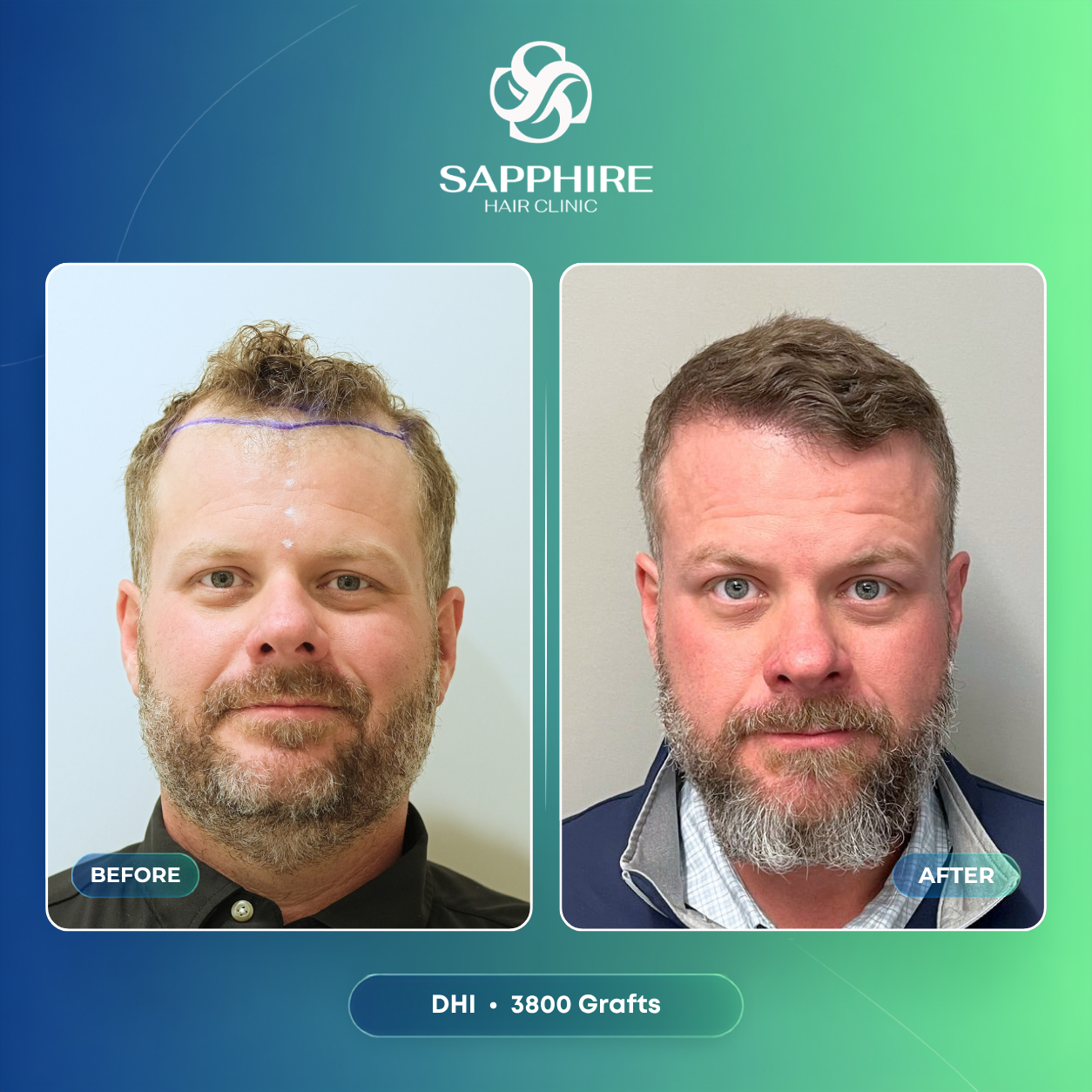
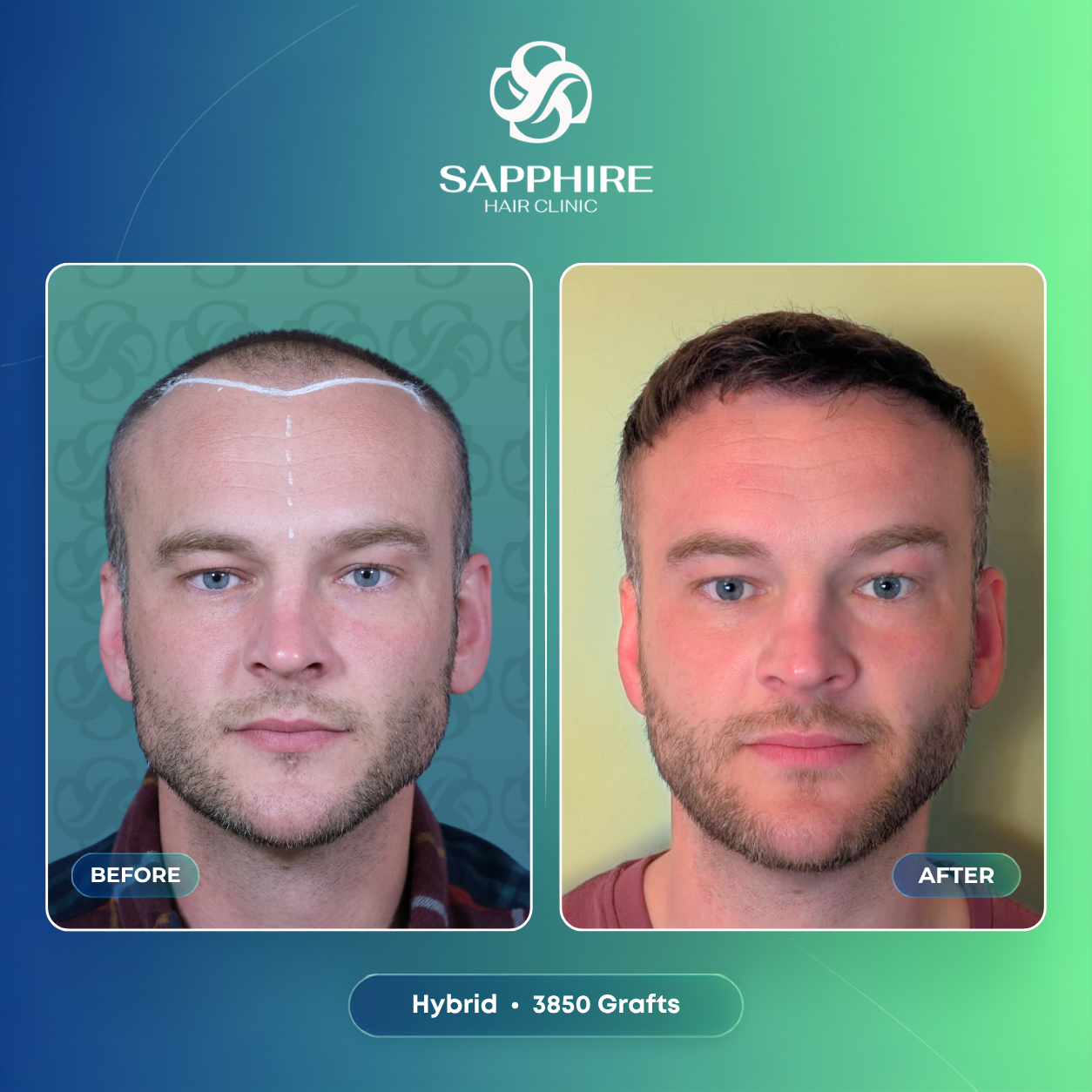
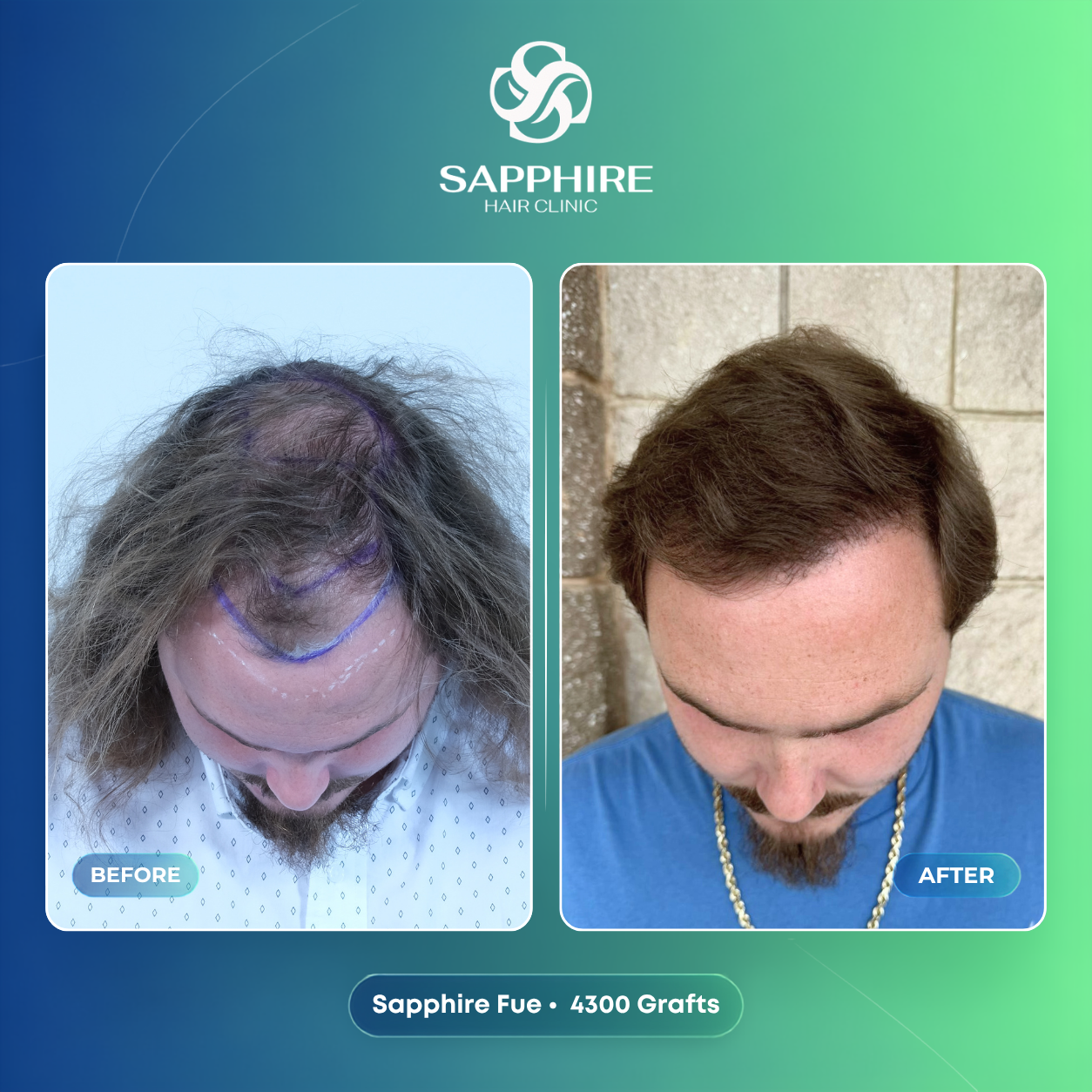
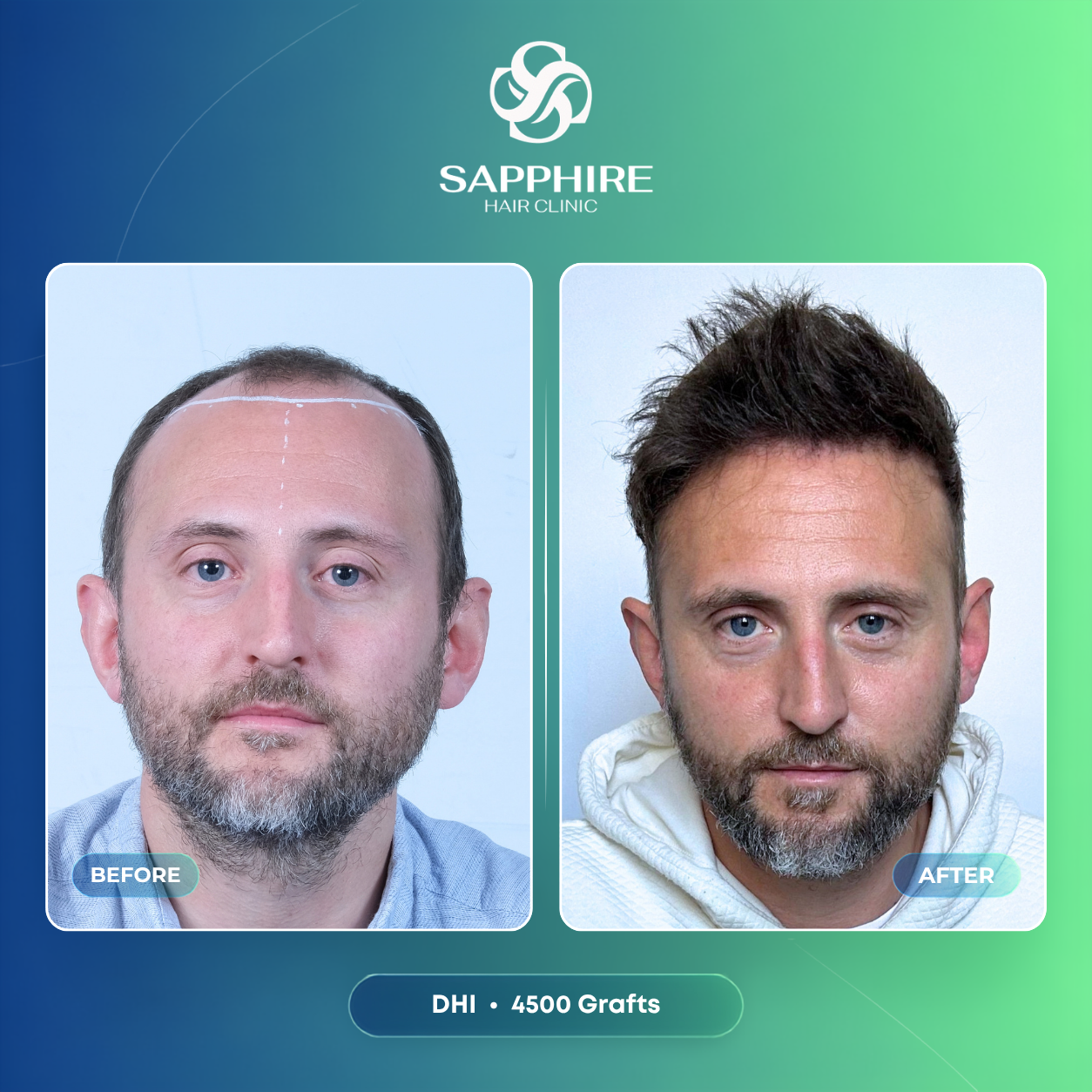
A more involved surgery will be necessary if you have significant hair loss in the frontal, mid-head, temporal, and crown areas of your scalp. The total number of grafts required in this situation might potentially approach 4,000. The process of hair transplantation will require a full day. It's common for your scalp to feel sore, itchy, or uncomfortable for a few days following surgery. Do not fret. That is entirely typical. If you adhere to Sapphire Hair Clinic post-care instructions, you should witness noticeable hair growth in months three through six. Obtaining comprehensive outcomes may need up to a year.
5000 Grafts Hair Transplant in Turkey: Before and After
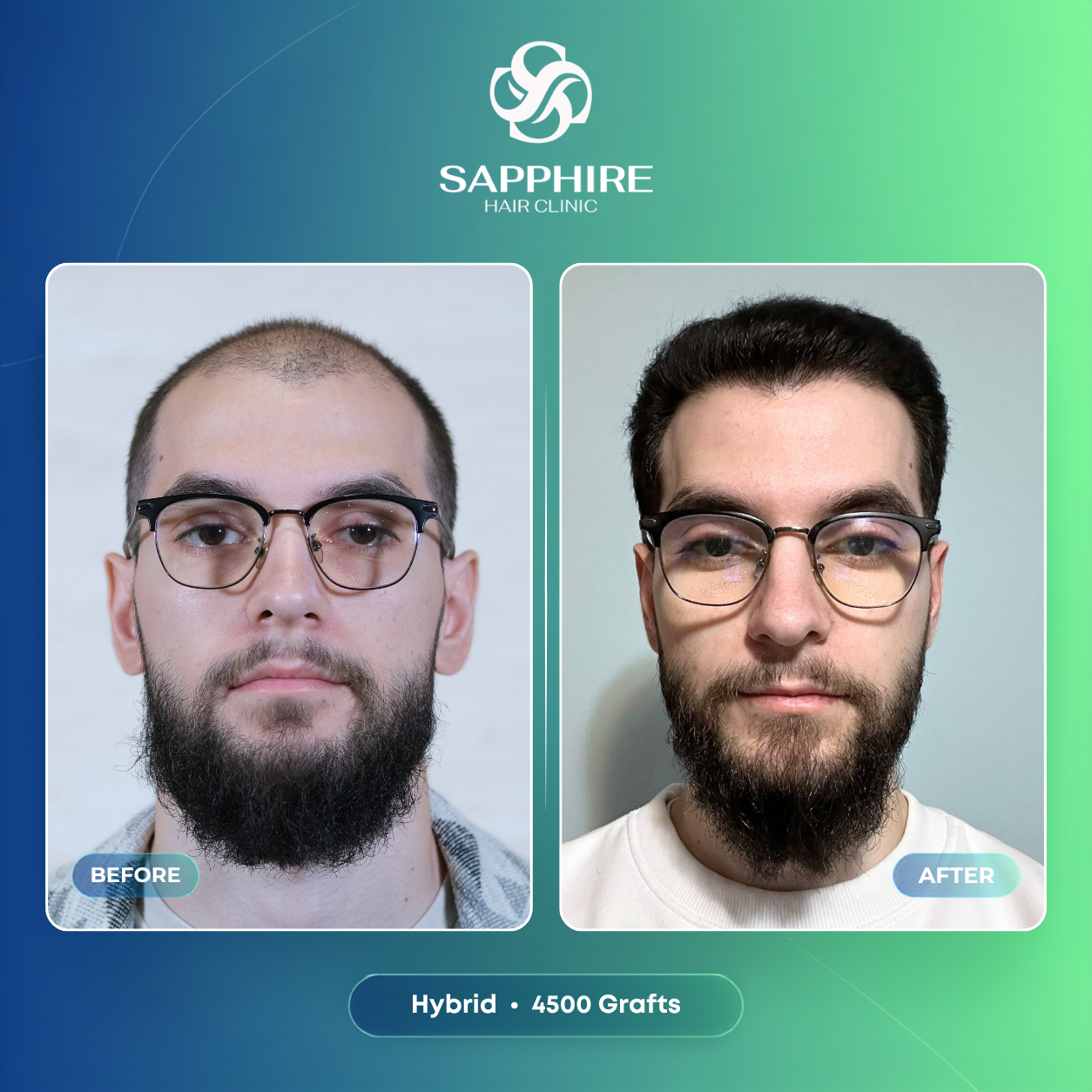
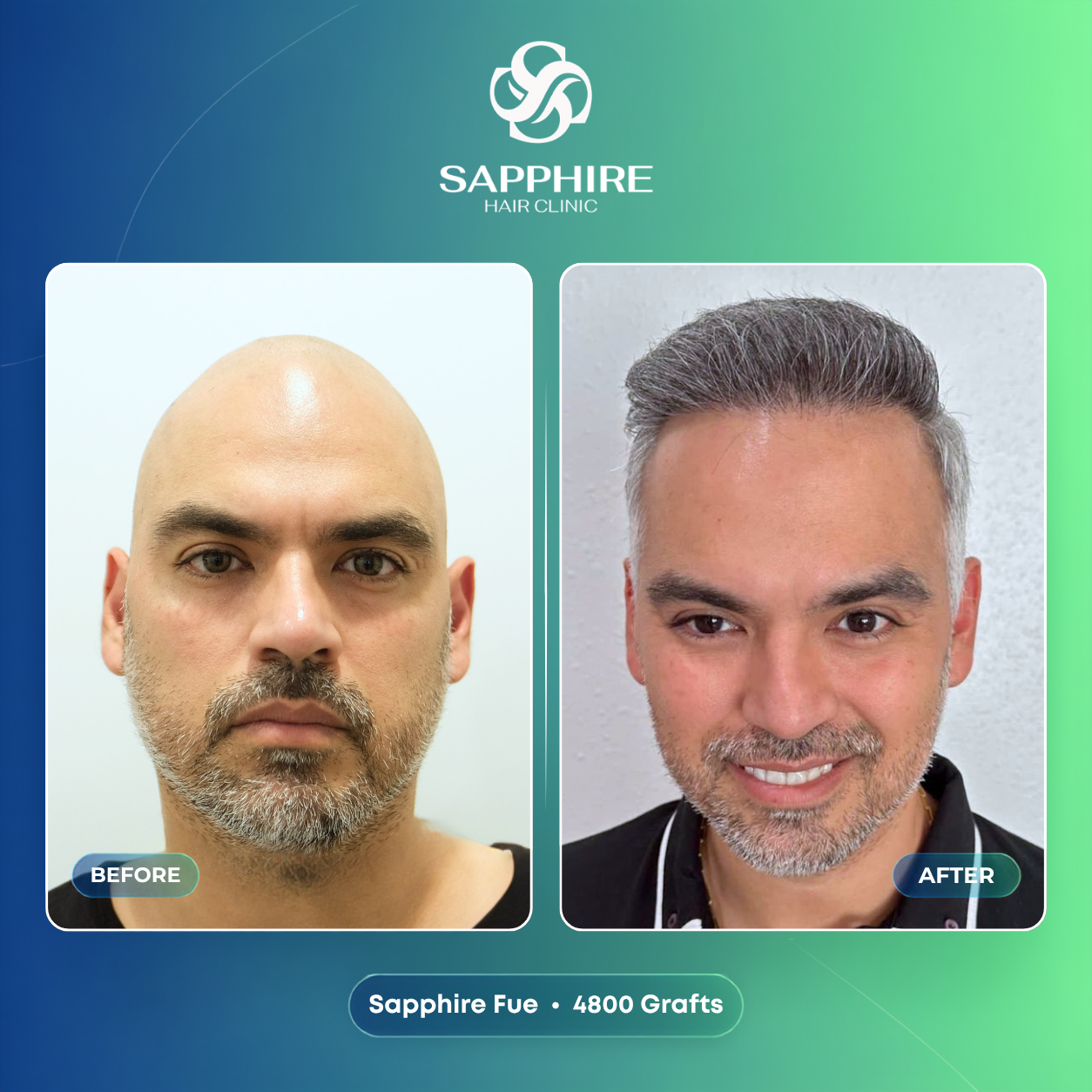
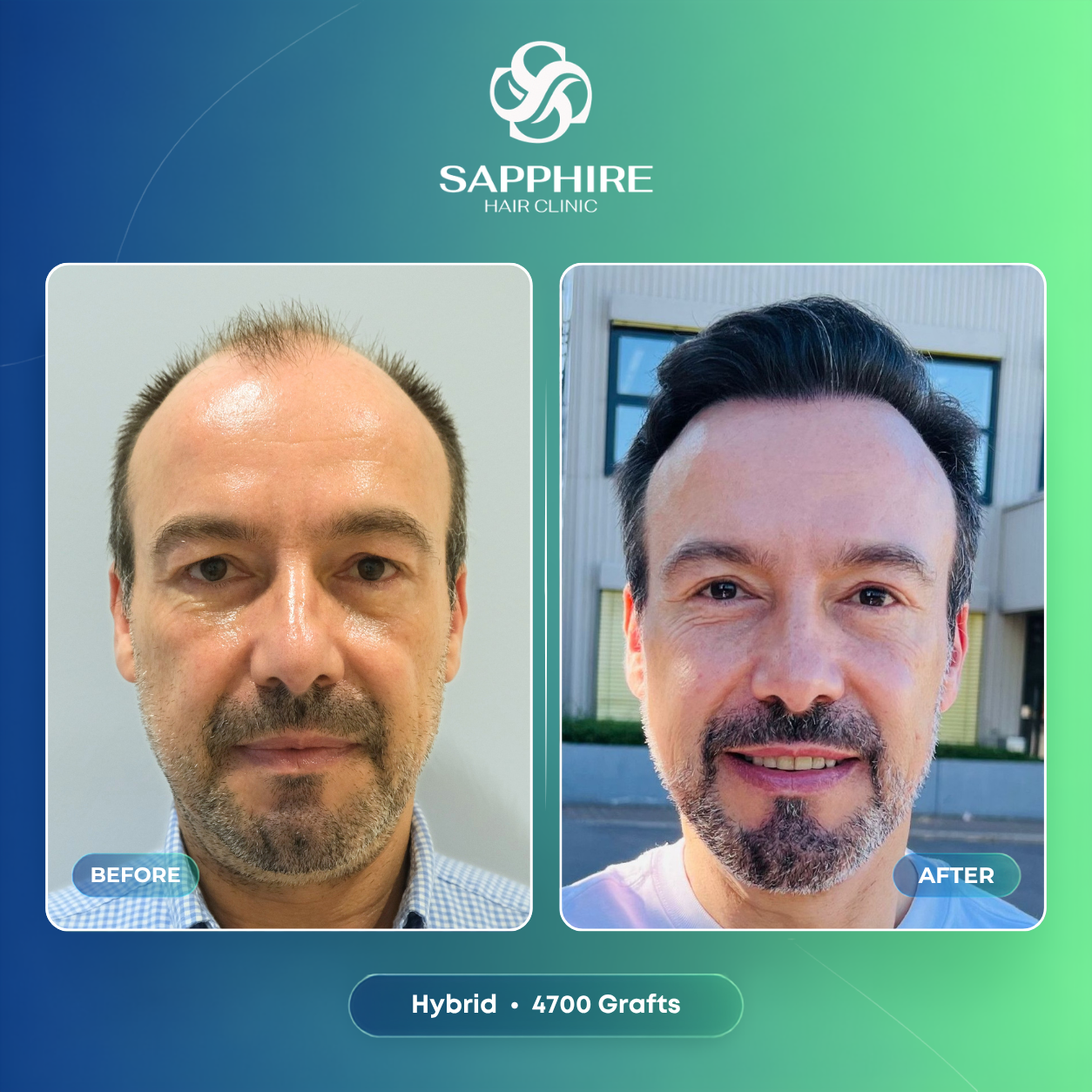
Patients who have advanced thinning hair or hair loss may need more involved treatments, involving up to 5,000 grafts. In that scenario, it's important to note that your operation will take place over the course of two days. Day one will see the majority of the treatment completed, with day two seeing the last touch-ups. The first hair to sprout should appear between months three and six, and the full effects of your Turkish hair transplant treatment should appear between months nine and twelve.
6000 Grafts Hair Transplant in Turkey: Before and After
Make sure you have enough healthy hair follicles in the donor location if your case calls for 6,000 grafts to get the desired outcome. Following confirmation of all surgical specifics, the physician will remove all required hair follicles and place them in the recipient location. The intricacy of the procedure means that this will probably take place over two days. Following the procedure, your scalp will start to heal immediately. It should heal entirely in about a month. Between months three and six following a 6,000-graft hair transplant procedure, you should start to notice results. It may take up to a year for your freshly implanted hair to grow to its full capacity. When the full potential of your recently transplanted hair is achieved, you can resume living a self-assured life.