


Folliculitis is a common skin condition that develops when hair follicles become inflamed. It can affect almost any area where hair grows, including the scalp, face, neck, chest, back, arms, legs, thighs, and buttocks. The first sign is often a group of small red bumps that look similar to acne. Some bumps may contain pus, while others simply feel itchy or tender.
Although folliculitis is often mild, the condition does not always have the same cause. Bacteria may be responsible, but yeast, shaving, friction, sweat, blocked follicles, medications, and physical irritation can also contribute. This is why understanding the type of folliculitis matters when choosing treatment.
Most mild cases settle without lasting skin damage. However, deeper or repeated inflammation can sometimes cause scarring or permanent damage to hair follicles. Learning how folliculitis starts, what it looks like, and which habits can trigger it can make recurring outbreaks easier to manage.
What Is Folliculitis?
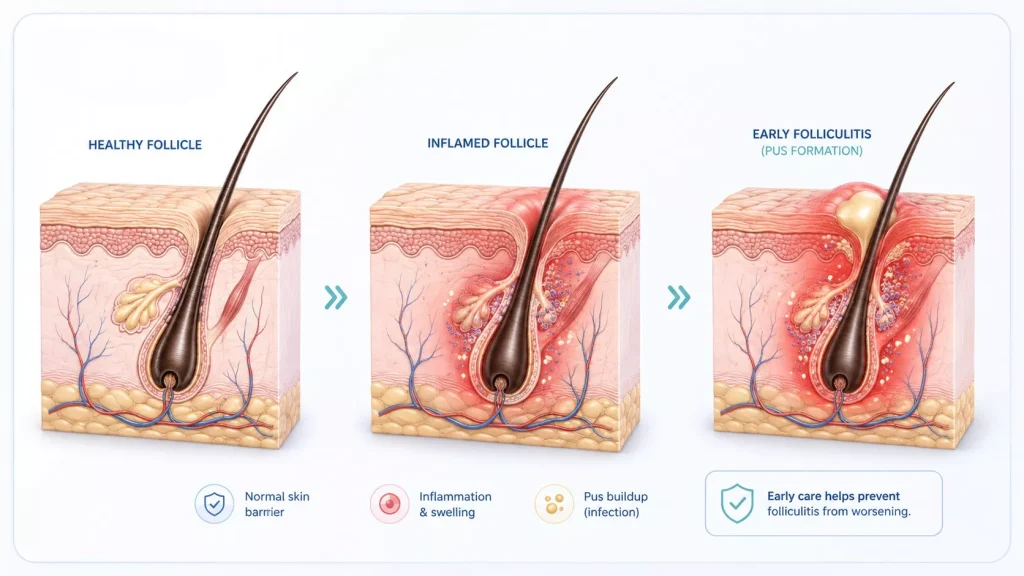
Folliculitis simply means inflammation of a hair follicle. Every visible hair grows through a small opening in the skin. When this follicle becomes irritated, blocked, injured, or infected, inflammation can develop around it.
The condition may involve only the upper part of the follicle or extend deeper into the skin. Superficial folliculitis usually produces smaller bumps or pustules. Deep folliculitis affects more of the follicle and may create painful boils or larger areas of inflammation.
The condition is not limited to people with oily or acne-prone skin. Anyone can develop folliculitis. Something as simple as repeated shaving, a sweaty workout, tight clothing, or irritation from a cosmetic product may be enough to trigger a flare.
What Does Folliculitis Look Like?
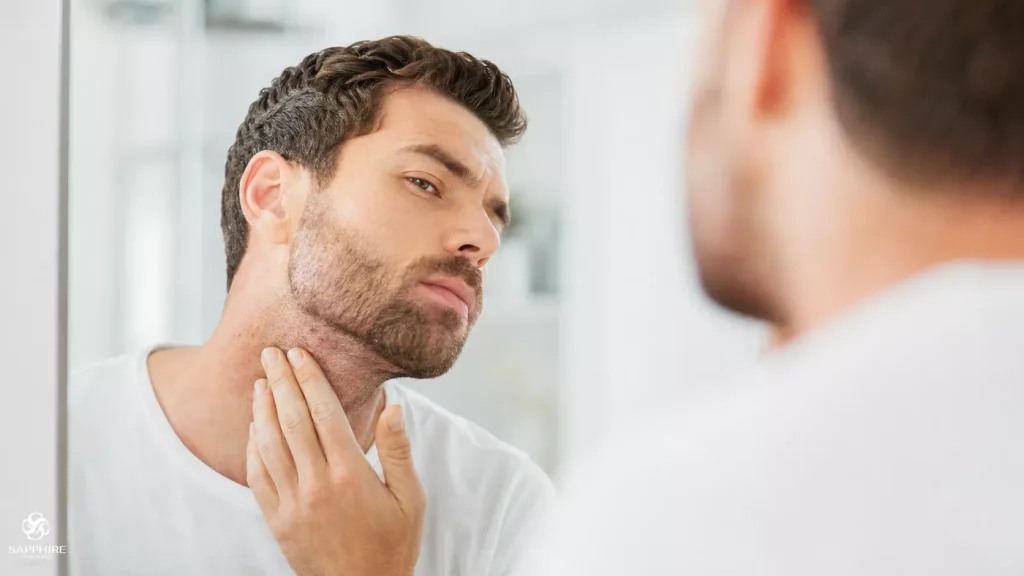
The appearance of folliculitis depends partly on what caused it and how deeply the follicle is affected. Many cases begin as small bumps centered around individual hairs. The skin surrounding the follicle may appear red or inflamed, while some lesions develop a white or yellow center.
Common signs of folliculitis include:
- Small red bumps around hair follicles
- Pimple-like spots containing pus
- Itchy or burning skin
- Tenderness around affected follicles
- Clusters of small inflamed bumps
- Blisters that break and form a crust
- Painful swollen bumps in deeper cases
- Soreness when clothing rubs against the area
Folliculitis can resemble acne, heat rash, insect bites, or ingrown hairs. One useful clue is that the bumps often develop directly around hairs rather than randomly across the skin.
What Causes Folliculitis?
There is no single folliculitis cause. Infection is common, but irritation and blockage can produce similar inflammation.
Bacterial folliculitis is often associated with Staphylococcus aureus. These bacteria can live on the skin without causing a problem. If a follicle becomes damaged, bacteria may enter and trigger an infection. Bacterial folliculitis can remain superficial or develop into deeper boils.
Yeast can also cause follicular inflammation. Malassezia folliculitis commonly appears on the upper body and may produce groups of itchy, acne-like bumps. Because the condition is caused by yeast rather than bacteria, antibiotics do not treat the underlying problem.
Other cases have nothing to do with infection. Hair regrowth after shaving, waxing, plucking, or other forms of hair removal can irritate follicles. Thick creams, oils, adhesive materials, friction, and certain medications may also contribute.
What Are the Main Types of Folliculitis?
Bacterial folliculitis is one of the most common forms. It generally causes itchy or tender pus-filled bumps around hairs. When bacterial infection reaches deeper tissue, the lesion may become a boil.
Hot tub folliculitis develops after exposure to water contaminated with Pseudomonas aeruginosa. The rash can appear after using a poorly maintained hot tub, heated pool, or similar water facility. It often becomes more noticeable in areas covered by swimwear.
Malassezia folliculitis is associated with yeast. It frequently affects the chest, shoulders, back, and sometimes the face. The bumps can look like acne but are often quite itchy.
Pseudofolliculitis barbae is slightly different because it involves ingrown hairs rather than an infected follicle. It commonly affects the beard and neck after shaving, particularly when hair is tightly curled. Cut hairs curve back toward the skin and create repeated inflammation.
Several less common forms also exist, including gram-negative folliculitis and eosinophilic folliculitis. The appearance may overlap, which is why persistent cases can require examination rather than treatment based only on how the bumps look.
Where Can Folliculitis Develop?
Folliculitis can occur almost anywhere hair follicles are present. The scalp, beard, neck, chest, shoulders, back, arms, buttocks, thighs, and legs are among the areas commonly affected.
Location sometimes offers a clue to the trigger. Beard folliculitis may follow shaving. Bumps on the thighs or bikini area may appear after waxing or hair removal. Chest and back folliculitis can become more noticeable when sweat remains trapped beneath tight clothing.
Buttock folliculitis is particularly common. Pressure from sitting, clothing friction, heat, and sweat can create a difficult environment for already irritated follicles.
The palms of the hands and soles of the feet do not develop true folliculitis because these areas do not contain hair follicles.
Why Does Folliculitis Develop After Shaving?
Shaving places repeated mechanical pressure on the upper part of the hair follicle. A razor may create tiny cuts that are difficult to see but still leave the skin more open to irritation.
Shaving too closely can create another issue. When a hair is cut close to the surface, it may curl back into the skin as it grows. This produces an inflammatory reaction commonly called a razor bump or pseudofolliculitis barbae.
The problem tends to be more common on the beard and neck, although it may also occur on the legs, underarms, and bikini area. Using blunt blades, applying strong pressure, repeatedly shaving the same spot, and shaving against hair growth may increase irritation.
Can Sweat and Tight Clothing Cause Folliculitis?
Sweat is not automatically harmful to hair follicles. Problems often develop when heat and moisture remain trapped against the skin for long periods.
Tight workout clothes, leggings, helmets, boots, straps, or protective clothing can hold sweat against the body while repeatedly rubbing the same area. This combination of moisture and friction can disturb the follicles.
Folliculitis may therefore become more noticeable during hot weather or after intense exercise. Changing out of damp clothes and showering after workouts may reduce repeated exposure to these conditions. Mayo Clinic lists clothing that traps heat and sweat, follicle damage, and excessive sweating among factors that can increase folliculitis risk.
What Is Scalp Folliculitis?
Scalp folliculitis causes inflammation around hair follicles on the scalp. Small pustules may appear around the hairline or across larger areas. Itching can be significant, and scratching may leave spots sore or crusted.
Several microorganisms may be involved in scalp folliculitis, including bacteria and Malassezia yeast. The exact cause is not always clear.
Scalp folliculitis deserves more attention when inflammation is painful, persistent, or accompanied by visible thinning. Severe forms of follicular inflammation can damage follicles and may contribute to scar formation.
Is Folliculitis the Same as Acne?
Folliculitis and acne are different conditions even though they can appear similar. Both can cause red bumps and pustules, particularly on the face, chest, shoulders, and back.
Acne usually involves clogged pores, increased oil production, inflammation, and changes within the pilosebaceous unit. Blackheads and whiteheads are common clues.
Folliculitis tends to appear more directly around individual hair follicles. A hair may sometimes be visible in the center of the bump. The rash can also develop suddenly after shaving, sweating, swimming, or using certain products.
Appearance alone is not always enough to separate the two. A persistent acne-like rash that does not respond as expected may need a closer examination.
How Is Folliculitis Diagnosed?
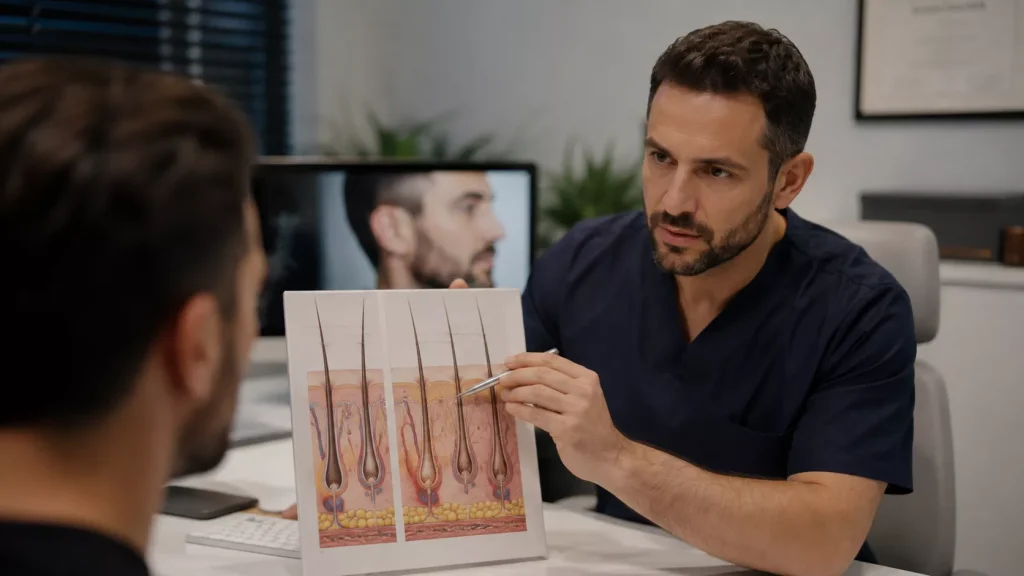
Folliculitis can often be identified by examining the skin and reviewing the history of the outbreak. The timing can be particularly helpful. A rash that appeared soon after shaving provides a different clue from one that followed time in a hot tub.
When folliculitis keeps returning or does not improve with initial care, further tests may be needed. A swab can help identify bacteria, while a skin scraping may be used to look for yeast. A skin biopsy is less common but can help rule out another condition when the diagnosis remains uncertain.
Identifying the cause helps avoid unnecessary treatment. Antibiotics, for example, will not treat yeast-related folliculitis.
How Is Folliculitis Treated?
Treatment for folliculitis depends on the cause and severity. A small area caused by mild irritation may settle when the trigger is removed. Pausing shaving, reducing friction, and keeping the skin clean may be enough in uncomplicated cases.
Bacterial folliculitis may require antibacterial treatment. Mild bacterial infections can sometimes be treated with topical medicine. Oral antibiotics are generally considered when an infection is severe, widespread, or keeps returning rather than being used routinely for every case.
Yeast-related folliculitis requires antifungal treatment. Depending on the condition, this can involve antifungal creams, shampoos, or oral medicine. Using repeated antibiotics for this type may fail because bacteria are not causing the rash.
A large boil or carbuncle may occasionally need to be drained in a medical setting. Squeezing or opening deep lesions at home can increase irritation and may spread infection.
Can Folliculitis Go Away Without Treatment?
Mild folliculitis can clear without prescription medicine. Removing the trigger and allowing the skin to recover may be enough, particularly when the problem follows friction, shaving, or temporary irritation.
Warm compresses may ease discomfort, while gentle cleansing helps keep sweat and debris away from inflamed follicles. Aggressive scrubbing should be avoided because irritated skin does not benefit from additional friction.
A condition that repeatedly disappears and returns may require more attention. In this situation, the important question is not only how to calm the current outbreak but why the follicles keep becoming inflamed.
How Can Folliculitis Be Prevented?
Folliculitis cannot always be prevented, but reducing common triggers may lower the chance of repeated flare-ups.
Helpful habits include:
- Use a clean razor and replace blunt blades
- Shave in the direction of hair growth
- Avoid repeatedly shaving over irritated skin
- Change out of sweaty clothing after exercise
- Keep frequently affected areas clean and dry
- Avoid sharing razors, towels, or washcloths
- Reduce tight clothing that repeatedly rubs the skin
- Shower after swimming or using a hot tub
- Use properly maintained swimming pools and hot tubs
- Avoid picking or squeezing inflamed follicles
- Wash workout clothes and towels regularly
- Review heavy creams or oils if bumps appear after use
These habits focus on the factors most often connected with follicular irritation, including friction, shaving, sweat, and contaminated water.
Can Folliculitis Cause Hair Loss?
Most superficial folliculitis does not cause permanent hair loss. Once inflammation settles, the follicle can continue producing hair normally.
The situation changes when inflammation becomes deep, severe, or long lasting. Damage can extend further into the follicle and eventually create scar tissue. Once a hair follicle has been destroyed by scarring, normal growth from that follicle may not return. Mayo Clinic lists permanent hair loss and scarring among possible complications of severe folliculitis.
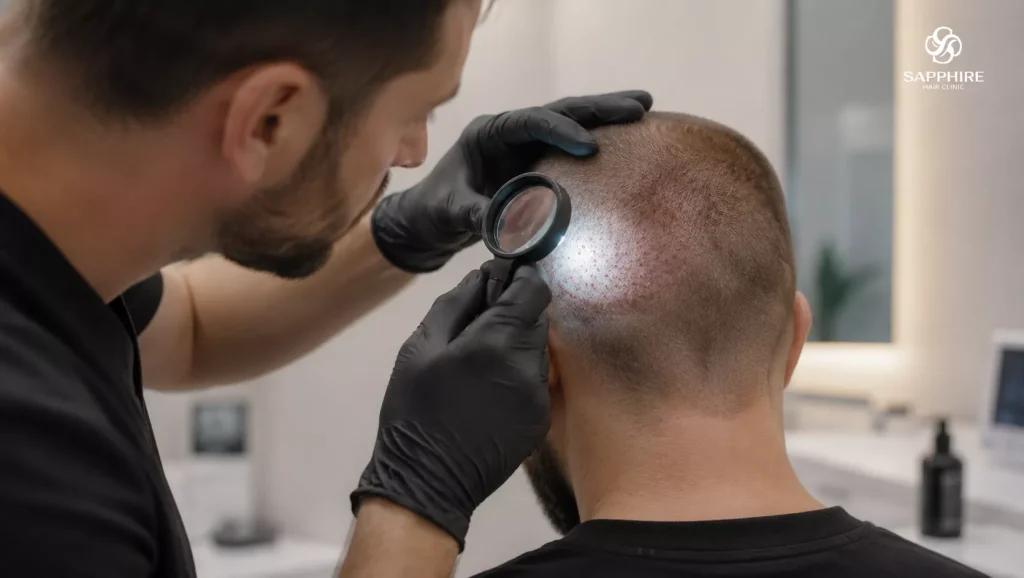
This is especially important with scalp folliculitis. Persistent pustules, painful crusting, visible scars, or areas of growing hair loss should not be ignored.
Is Folliculitis Contagious?
Whether folliculitis can spread depends on what caused it. Folliculitis related to shaving, blocked follicles, friction, or ingrown hairs is not contagious.
Some bacterial infections may spread through close skin contact or shared personal items. Sharing razors can be particularly problematic because blades may create tiny cuts while carrying bacteria between surfaces.
Keeping razors, towels, and washcloths separate is a sensible step whenever pustules or an active skin infection are present.
When Should Folliculitis Be Checked?
A few superficial bumps that are already improving may settle with basic skin care. Medical evaluation becomes more important when the rash is widespread, keeps returning, or fails to improve after a week or two of self-care.
Rapidly increasing redness, worsening pain, fever, chills, or feeling generally unwell can indicate a spreading infection and require prompt medical attention.
Deep boils, significant drainage, scarring, or scalp hair loss also deserve assessment. Persistent folliculitis may require testing to determine whether bacteria, yeast, irritation, or another skin disorder is causing the problem.
Living With Recurrent Folliculitis
Repeated folliculitis can be frustrating because the bumps may disappear only to return in exactly the same area. Looking for patterns is often more helpful than constantly changing skin products.
A flare that repeatedly follows shaving suggests that technique or hair regrowth may be involved. Bumps that develop after exercise may point toward sweat and friction. A rash appearing mainly on the chest or back during warm weather may have a different trigger from pustules forming around the beard.
Keeping the routine simple can also help. Overwashing, scrubbing, picking, and layering multiple strong products onto inflamed skin can create more irritation.
Folliculitis is usually manageable once its cause becomes clearer. Mild cases often settle with simple changes, while bacterial, yeast-related, or deeper forms may need targeted treatment. Recognizing the early signs and avoiding repeated irritation can help protect both the skin and the hair follicles from longer-lasting problems.