


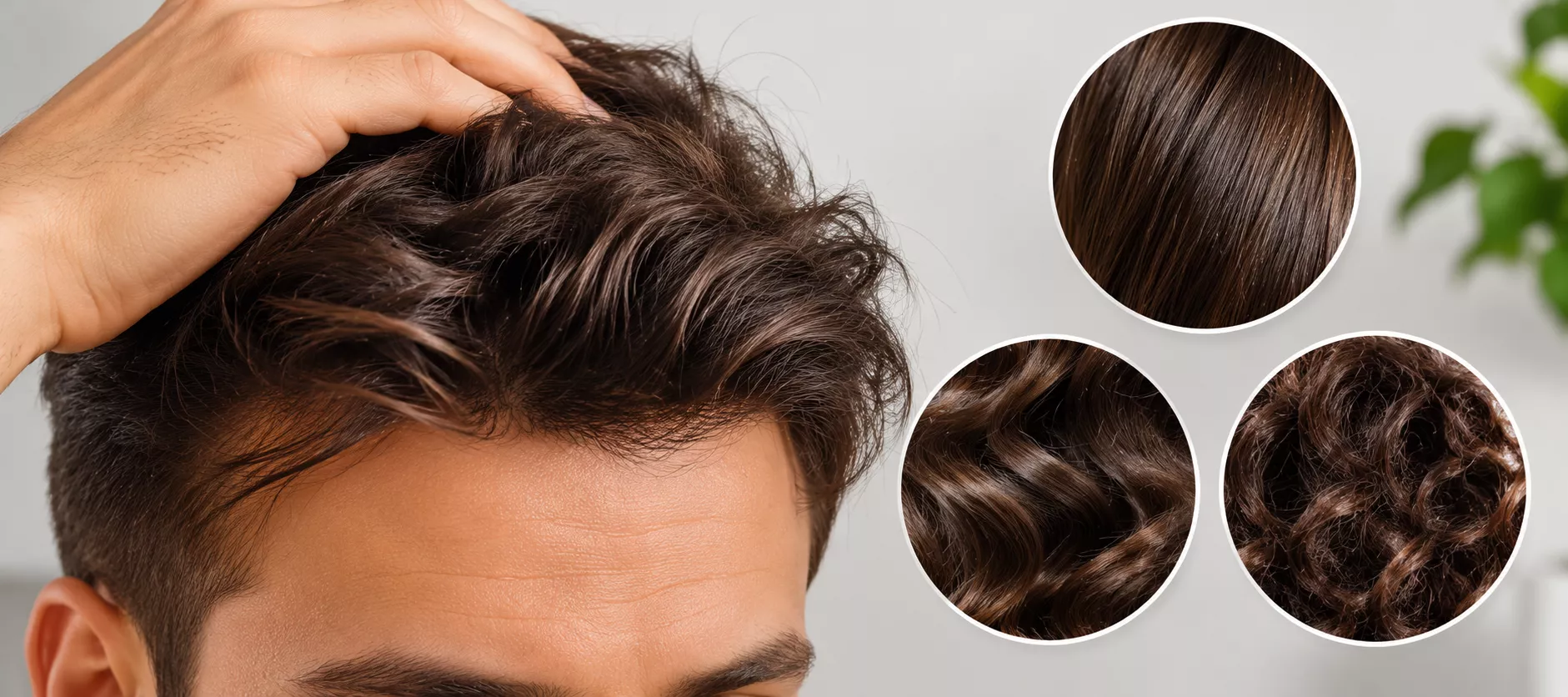
A hair transplant can fill a thinning hairline, but it brings up a question that photographs rarely answer: will the new hair feel like the hair you already have? Will soft, straight hair become coarse? Will natural curls survive the move?
In most cases, transplanted hair keeps the main characteristics of its original follicle. Still, the first hairs that appear after surgery can look surprisingly different. That distinction helps set realistic expectations.
Does Transplanted Hair Keep Its Original Texture After Surgery?
Yes, transplanted hair generally keeps its original texture, including its natural tendency to grow straight, wavy, or curly. A follicle taken from the back of the scalp usually continues producing hair with characteristics linked to that donor area, even after it has been placed somewhere else.
Early regrowth may look different. Surgery temporarily disrupts the follicle’s normal cycle. Early hair may appear fine, stiff, kinked, or uneven before it matures. Unusual changes can persist in some cases, so the result should be assessed over time rather than judged from a single early photograph.
How Donor Dominance Explains Hair Texture
Hair restoration is based largely on a principle called donor dominance. Follicles moved from suitable donor regions tend to retain important features of their original location. This includes their relative resistance to pattern hair loss and many of their visible characteristics. They do not simply become copies of surrounding hairs.
Donor dominance is a useful principle, not an absolute rule. Research has also documented changes in transplanted follicles and some influence from the recipient area. Careful selection and placement help achieve a natural match.
Straight, Wavy, and Curly Hair After Transplantation
Straight donor hair usually grows back predominantly straight. Wavy follicles generally continue to make wavy hair, and curly donor follicles tend to preserve their curl pattern. The outcome may seem different when the hairs are very short, since curls and waves are easier to recognize after the strands gain length.
Curls can create fuller-looking coverage, while straight hair may lie flatter. Planning considers graft numbers and how the hair will sit. The aim is believable texture and direction, not simply the greatest possible density. This is particularly important near the temples, where even a small difference in how the hair bends can be noticeable.
Hair Texture Changes During the First Year
A transplant needs months to reveal its appearance. Many implanted shafts shed in the first few weeks, even while viable follicles remain beneath the skin. New growth often starts around the third or fourth month, then gradually becomes longer and more consistent. The crown can mature more slowly. See the clinic’s aftercare guide for recovery details.
| Recovery Stage | Common Hair Appearance | What It Means |
|---|---|---|
| First 1–3 months | Shedding, patchy coverage | Early healing and resting phase |
| Months 3–6 | Fine or uneven new strands | Regrowth is beginning |
| Months 6–9 | More length; texture may look rough | Hair is still developing |
| Months 9–18 | Fuller, more settled appearance | Results continue to mature |
Why Does New Transplanted Hair Sometimes Feel Coarse?
It can be unsettling when newly grown hair feels wiry while the neighboring strands remain soft. Early regrowth may have an irregular shaft or behave differently after the follicle has been through extraction, implantation, and a resting phase. Short hairs can also stand upright, making them appear rougher than they actually are.
Dryness and styling habits add another layer. Washing too aggressively or applying strong heat to sensitive new growth can make hair harder to manage. The feel may improve, but lasting severe curl changes deserve assessment. Coarse regrowth alone does not prove that the transplant has failed. A photograph taken after a haircut may also exaggerate the contrast between the short new hairs and the longer hair around them.
Will Transplanted Hair Blend With Existing Hair?
A natural blend depends on more than the donor follicle’s texture. Hair color, shaft thickness, curl pattern, density, and the angle of each implanted graft all matter. Older, thinning native hair may look different from healthy donor hair.
During planning, the front hairline often calls for a softer, less dense transition than the areas behind it. The surgeon may select finer grafts for visible edges and place others where they provide better coverage. This approach can make minor texture differences less obvious without expecting every strand to behave in precisely the same way. Styling and the direction of a natural part also influence how easily the new hair blends.
Which Hair Changes Are Normal After a Transplant?
Some changes are part of recovery, while others deserve closer attention. The useful question is whether the appearance is steadily improving or whether a new symptom is developing.
- Temporary shedding: Transplanted shafts commonly fall out before new growth begins.
- Fine initial regrowth: Early strands can look thinner or less even than mature hair.
- A rough or wiry feel: Short new hairs may be stiff and difficult to lay flat.
- Mild curl variation: A different wave or bend can appear during regrowth.
- Persistent severe kinking: Marked changes that remain or worsen should be checked, particularly with scalp irritation.
Texture, Thickness, and Density Are Not the Same
People often say their transplanted hair is “thicker” when they mean that the scalp looks fuller. Texture describes the strand’s shape and feel. Thickness refers to the diameter of individual shafts, whereas density describes how many hairs grow in a particular area. Each feature contributes something different to the final appearance.
| Feature | What It Describes | Why It Matters After Surgery |
|---|---|---|
| Texture | Straight, wavy, curly, or coily pattern | Helps new hair blend naturally |
| Thickness | Diameter of each strand | Influences visible coverage |
| Density | Number of hairs in an area | Affects overall fullness |
| Growth direction | Angle at which strands emerge | Shapes the hairline and styling |
A person can have fine but high-density hair, or coarse hair with relatively low density. Keeping these distinctions clear prevents unrealistic expectations about what transplantation can change.
Does FUE or DHI Change Your Natural Hair Texture?
Neither FUE nor DHI is designed to turn straight hair curly or curly hair straight. These methods differ in how follicles are extracted and implanted, not in the genetic properties of the donor hair. The way grafts are handled and positioned still matters because damage or unusual angles can influence how regrowth looks.
Learn about FUE hair transplantation and DHI hair transplantation. Method choice depends on the donor area and treatment plan, not promises about changing texture.
Is Beard Hair Different From Scalp Donor Hair?
Beard hair is often coarser and may have a different curl pattern or growth cycle from scalp hair. If it is used to supplement a limited scalp donor supply, those differences can remain visible after transplantation. Research on body and beard grafts has found that many retain their original color, curl, and shaft diameter.
This makes placement especially important. Coarse beard strands may be useful for adding coverage in selected areas, but they can look conspicuous along a soft frontal hairline. The clinic’s beard hair transplant page explains facial-hair restoration, a separate procedure that also requires attention to growth direction and texture.
How Should You Care for Transplanted Hair Texture?
The first priority is protecting the healing grafts. Once routine hair care is allowed, gentle handling helps minimize unnecessary dryness and breakage.
- Follow the post-operative washing plan: Early washing should protect the healing scalp, not scrub it.
- Avoid picking at crusts: Let scabs separate as directed during recovery.
- Be patient with styling: Very short regrowth may not lie the way longer hair does.
- Use gentle products: Avoid harsh chemical treatments until healing is complete and clearance is given.
- Reduce heat and tension: Excessive heat and tight hairstyles can damage growing strands.
Can Transplanted Hair Change Texture Years Later?
Transplanted follicles continue to age. Their strands may gradually gray or change in diameter, just as hair elsewhere on the scalp does. Hair loss can also continue in surrounding, non-transplanted areas, which may change the way a hairstyle looks even when the grafted hair remains present.
| Long-Term Change | Possible Explanation | Practical Response |
|---|---|---|
| Gradual graying | Normal hair aging | Routine color care after healing |
| Different overall fullness | Ongoing loss of native hair | Have new thinning assessed |
| Dry or brittle ends | Weathering and styling damage | Trim and condition as needed |
| Persistent unusual curls | Changes linked to transplantation | Request a scalp and hair review |