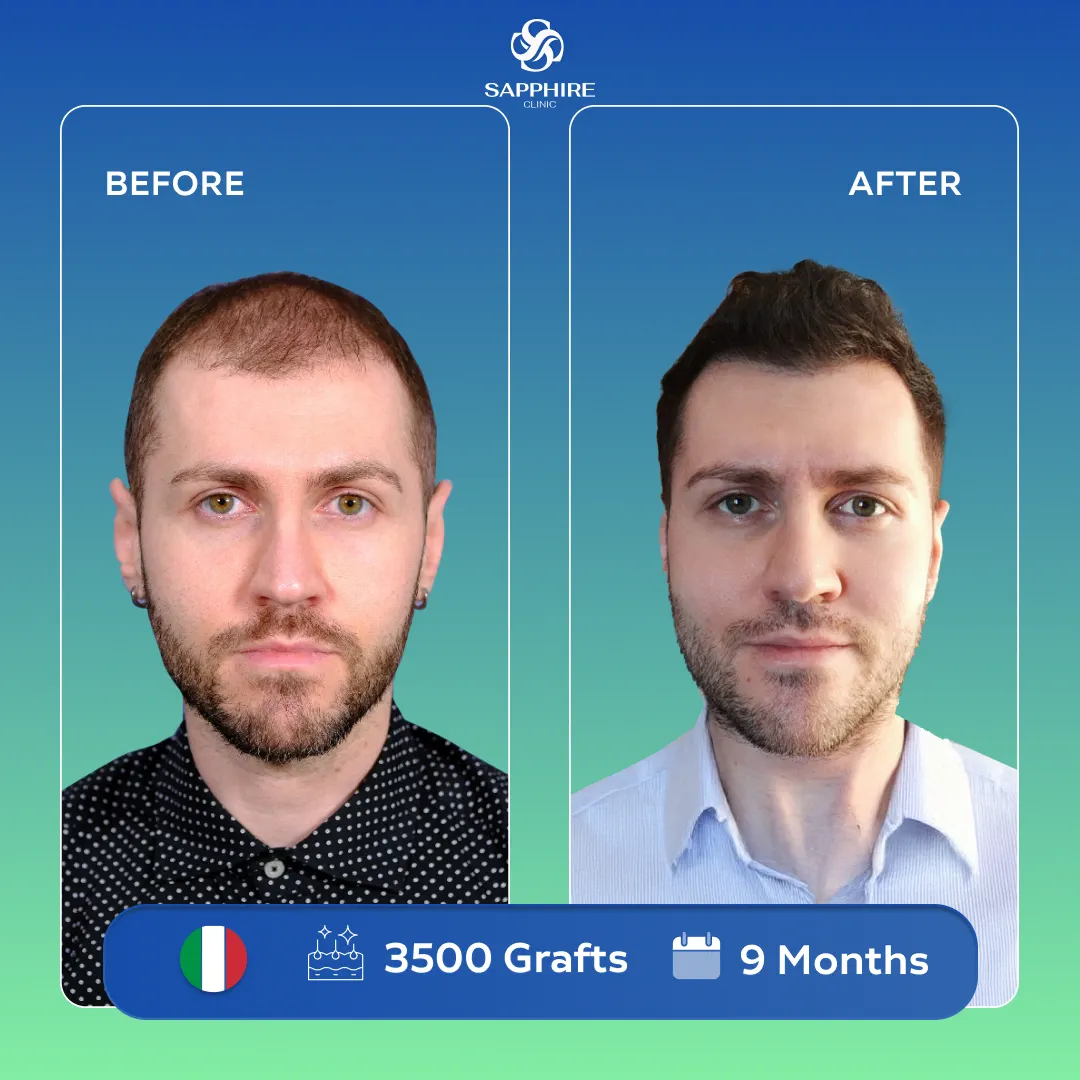
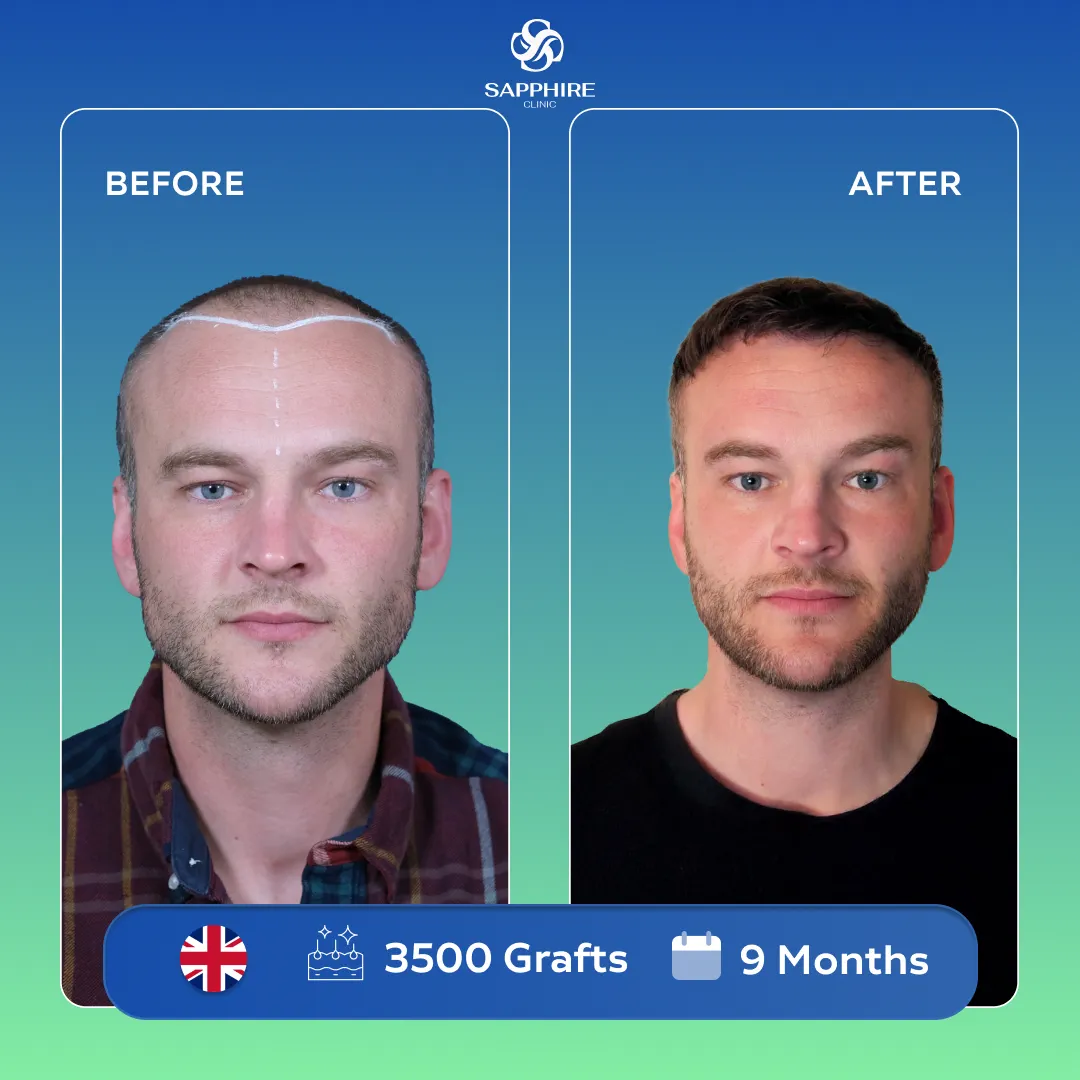
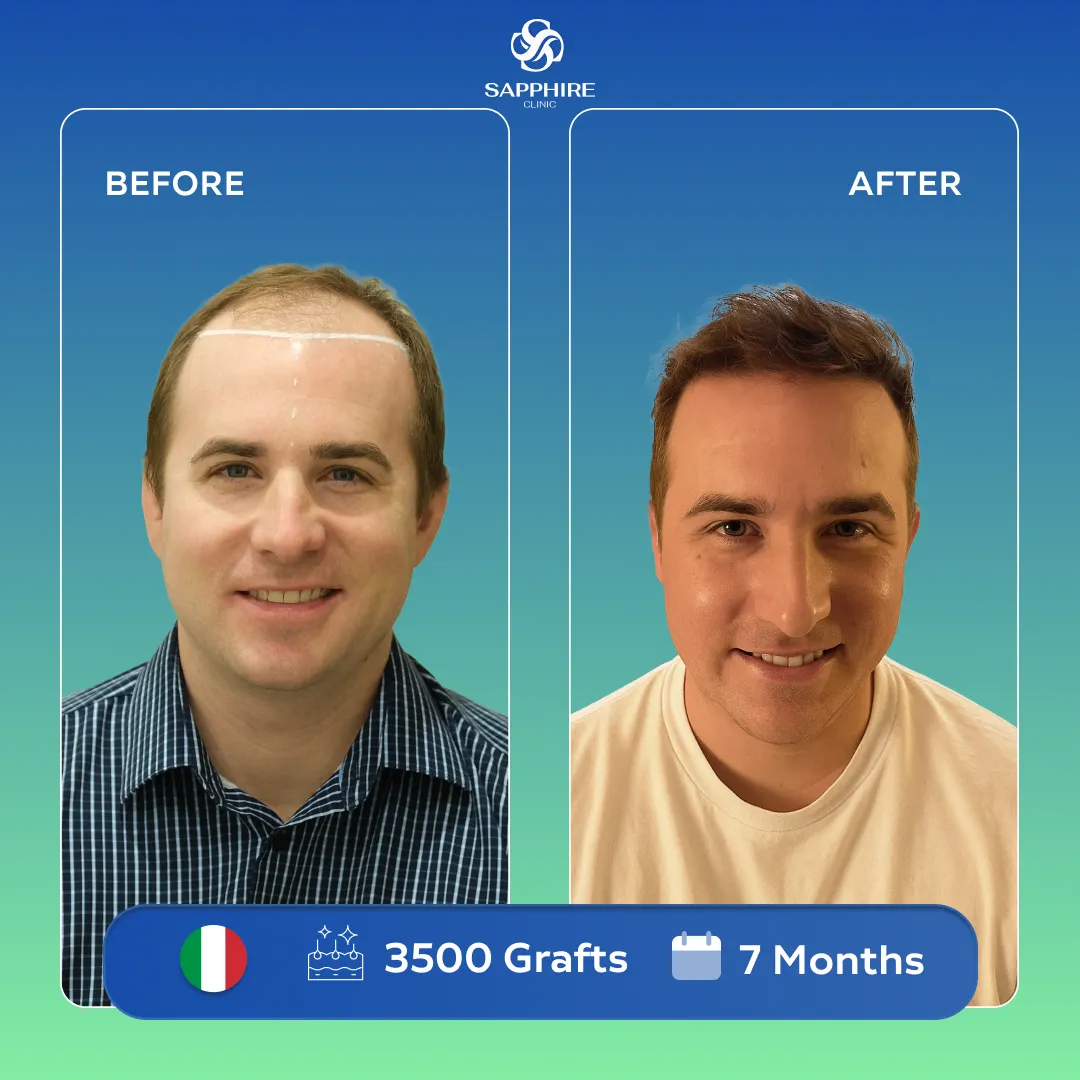
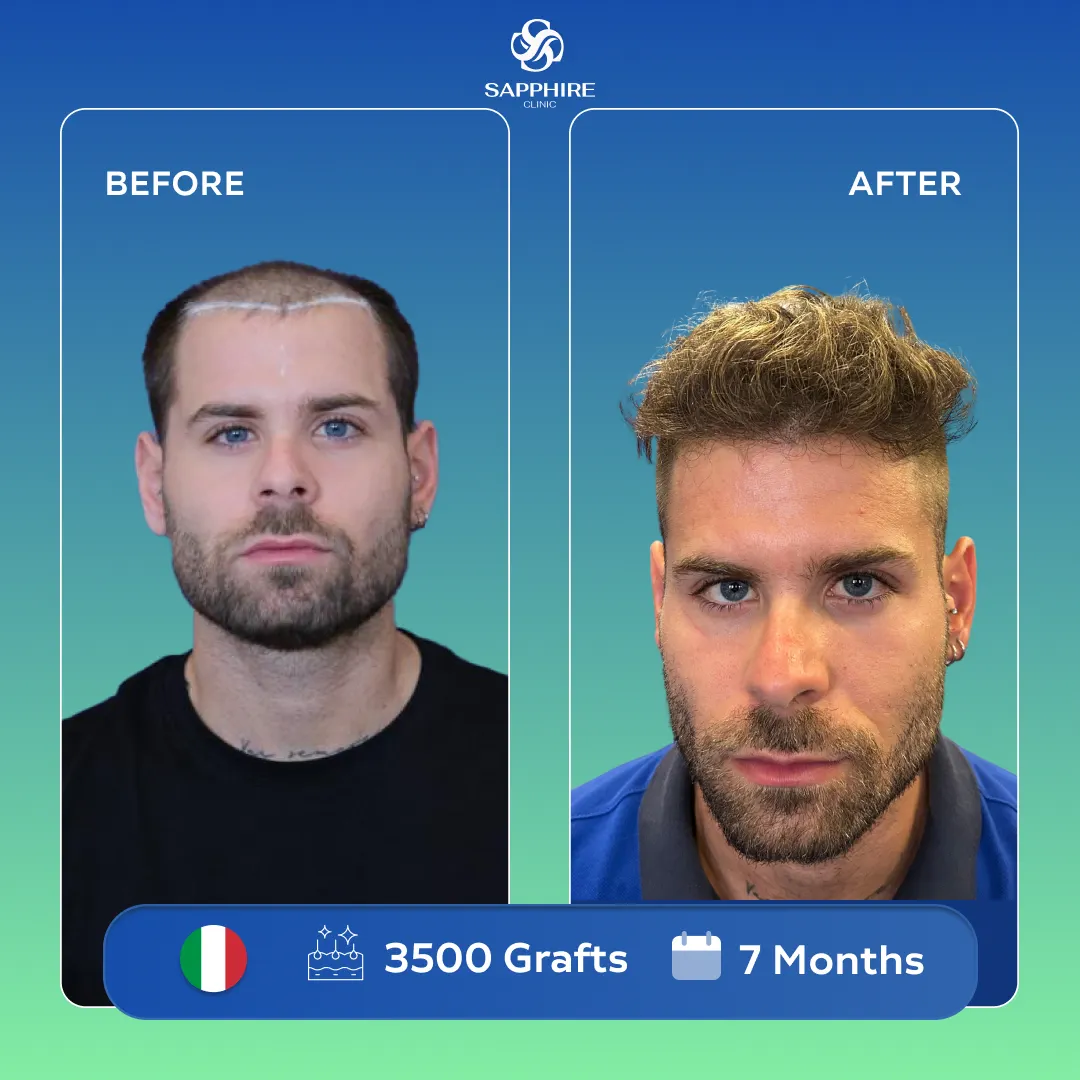
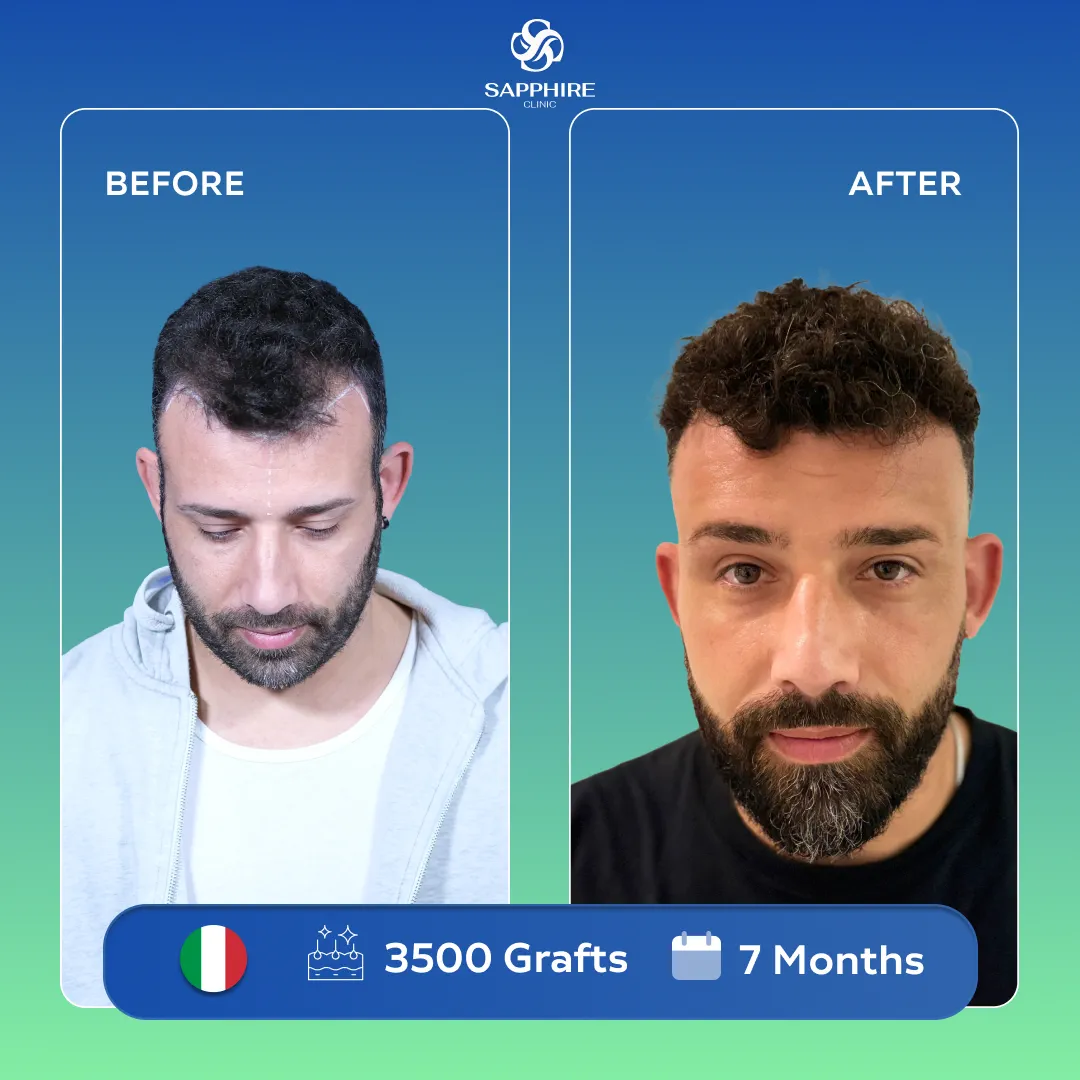
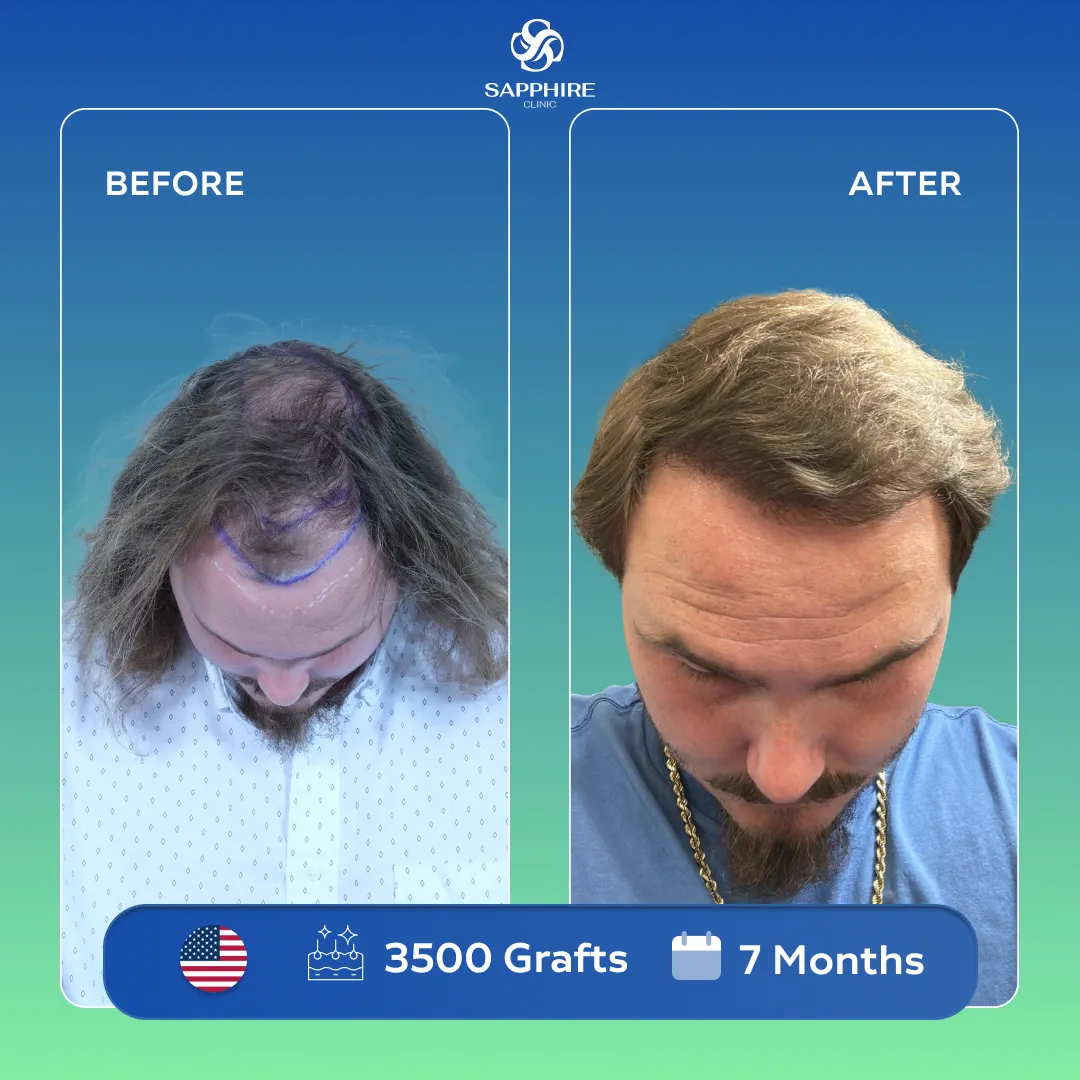
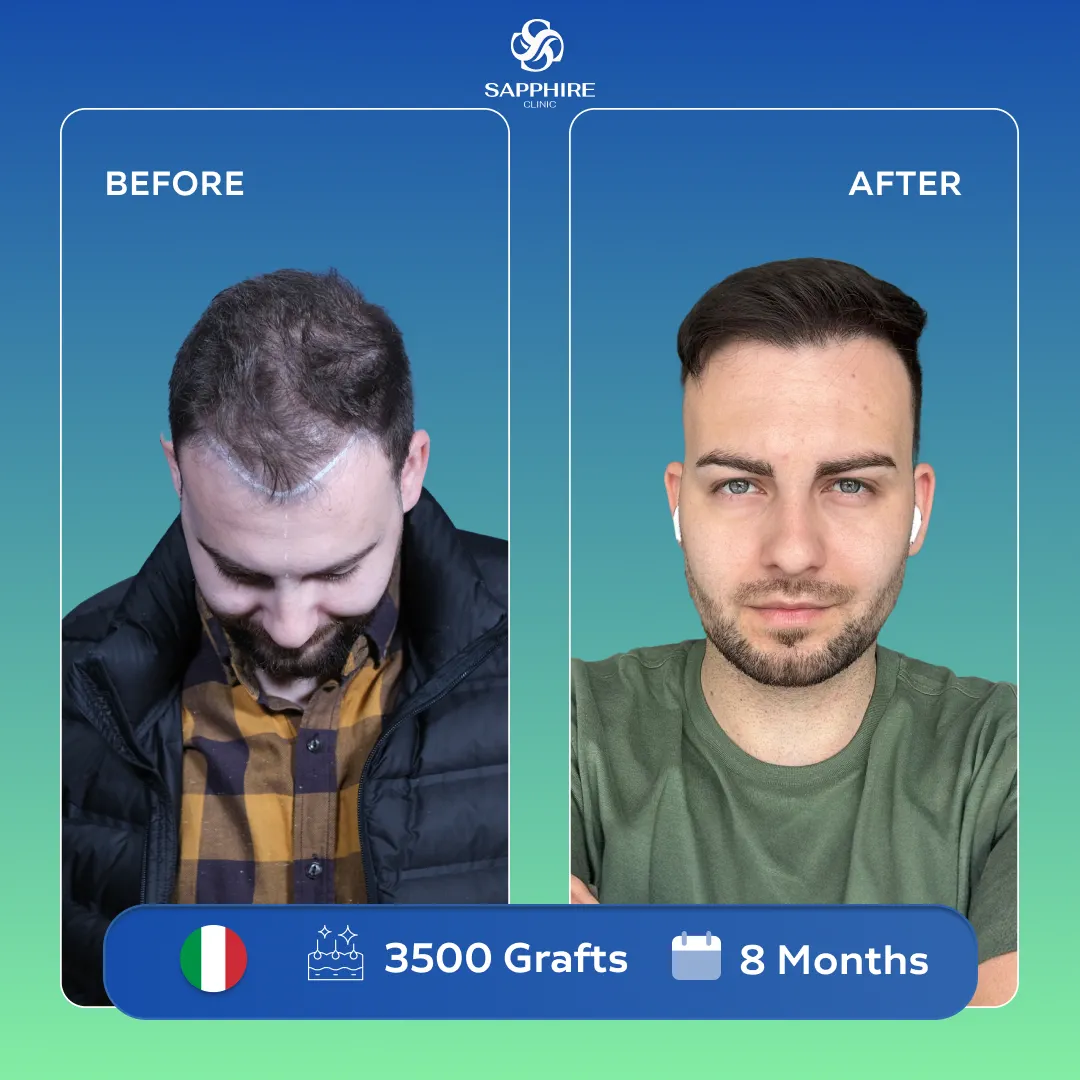
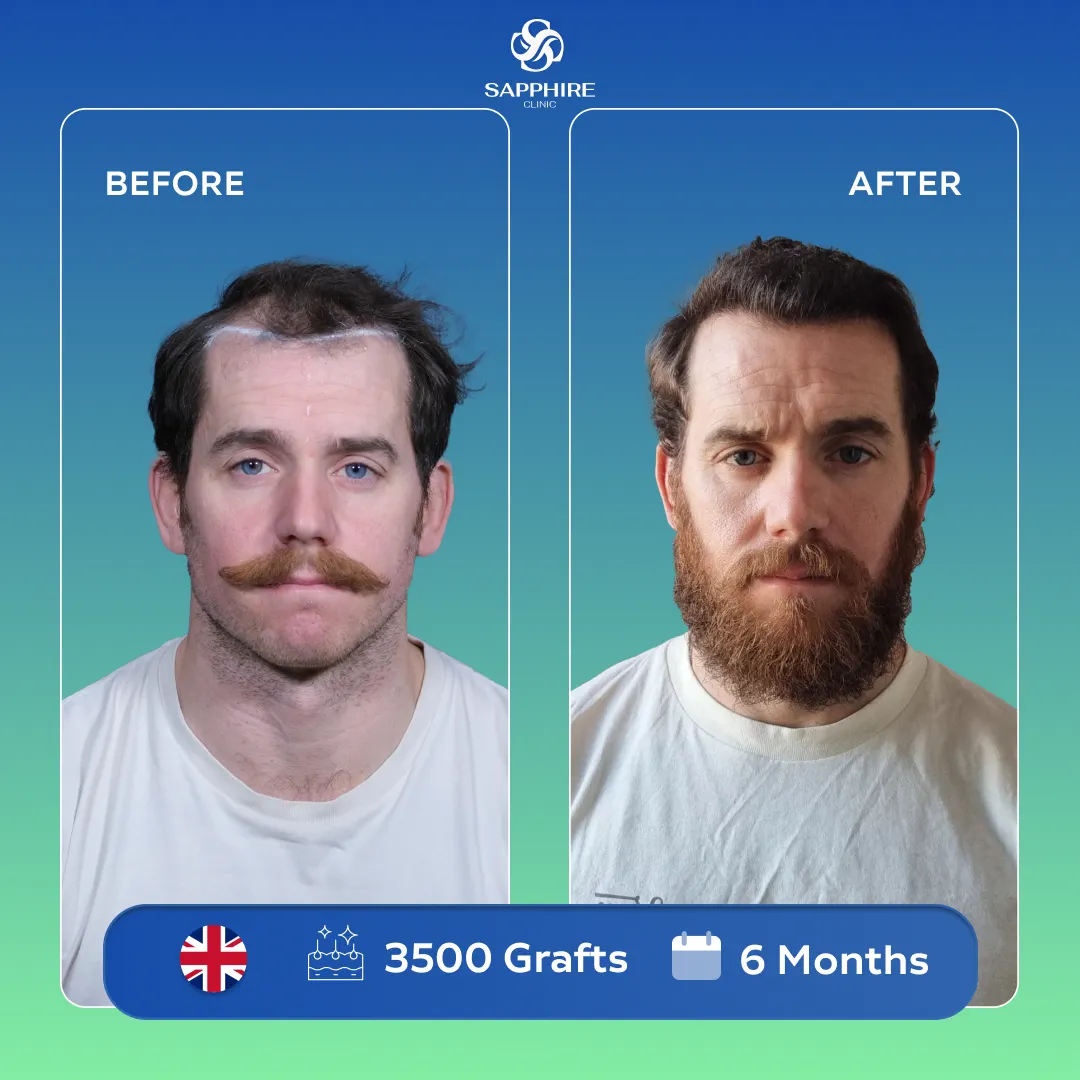
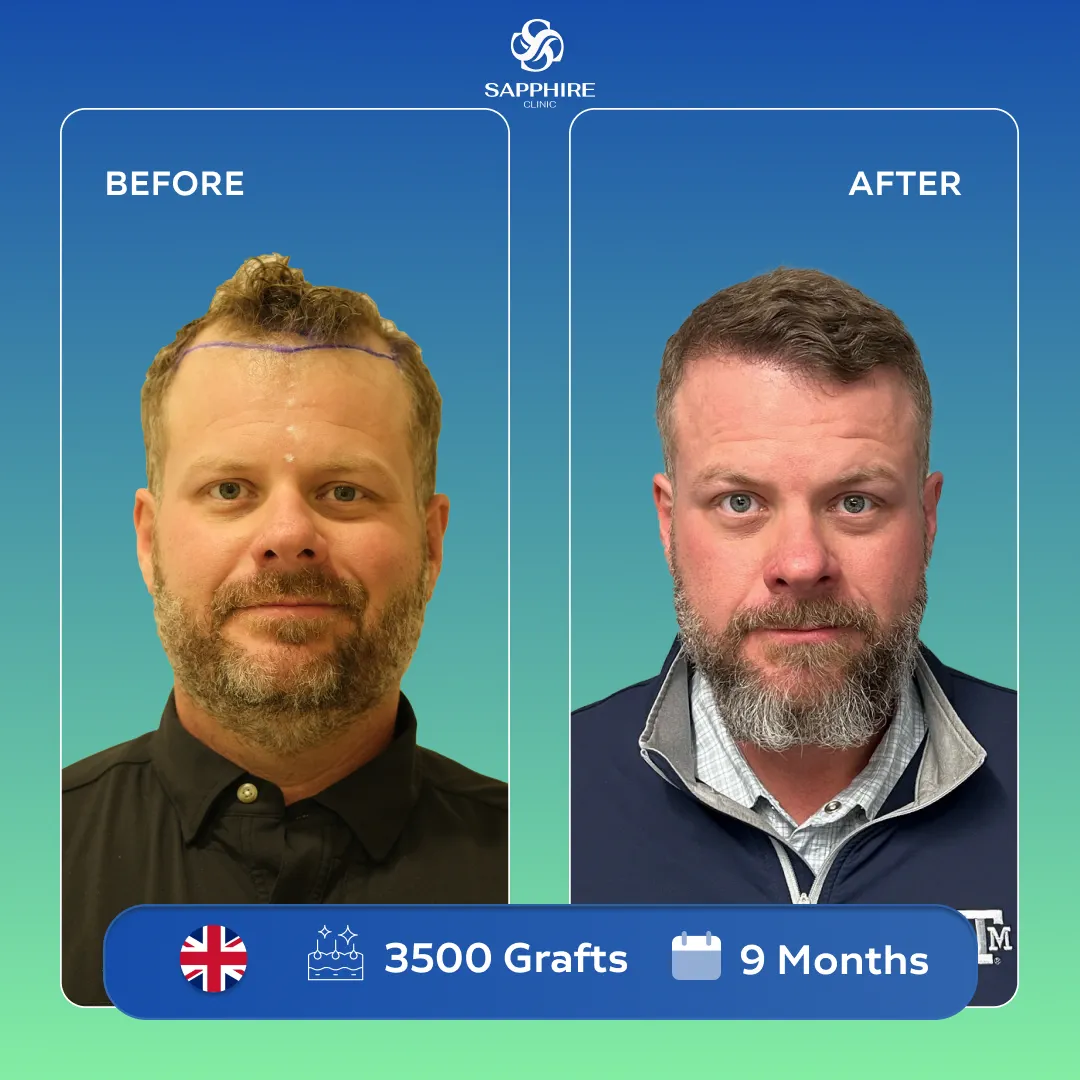
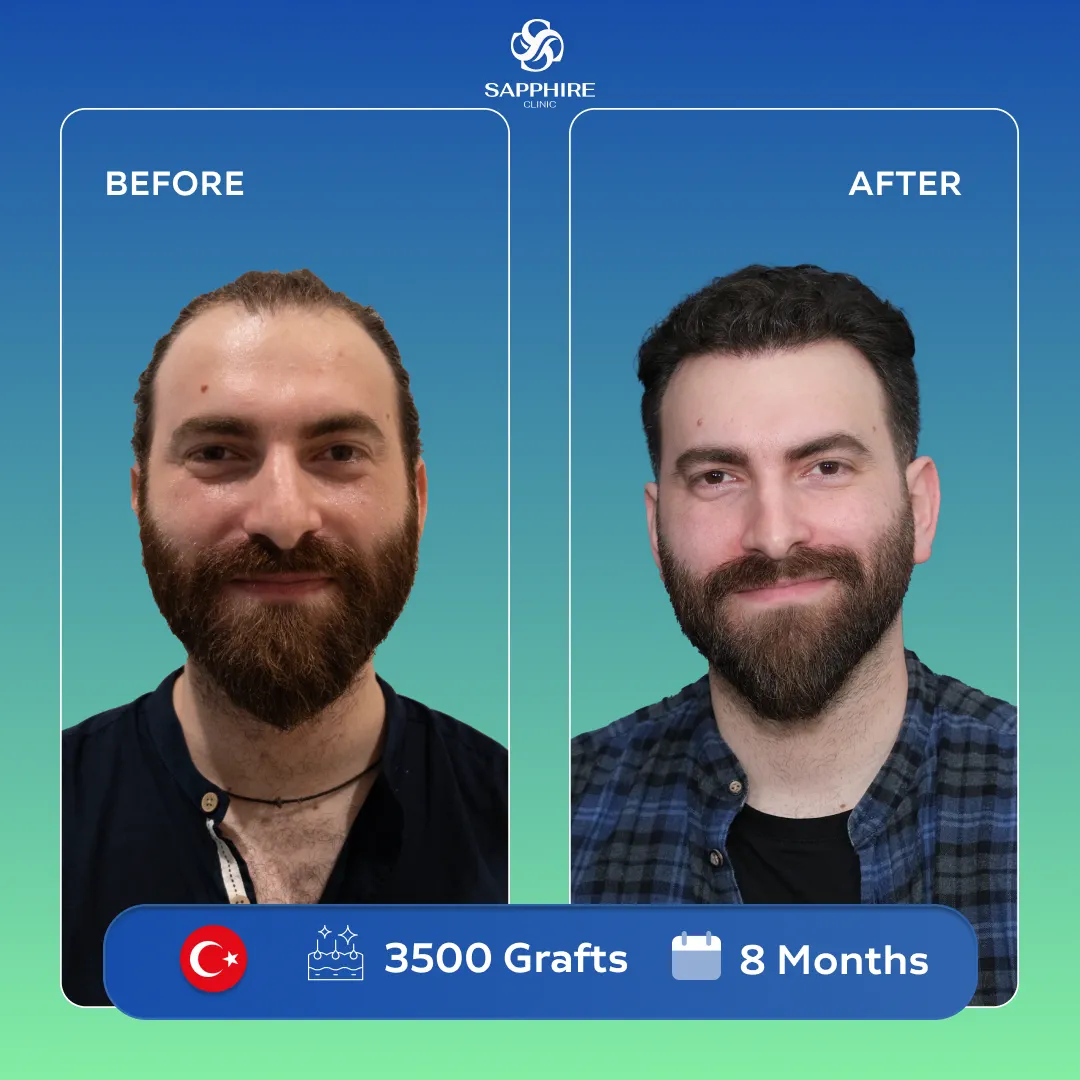
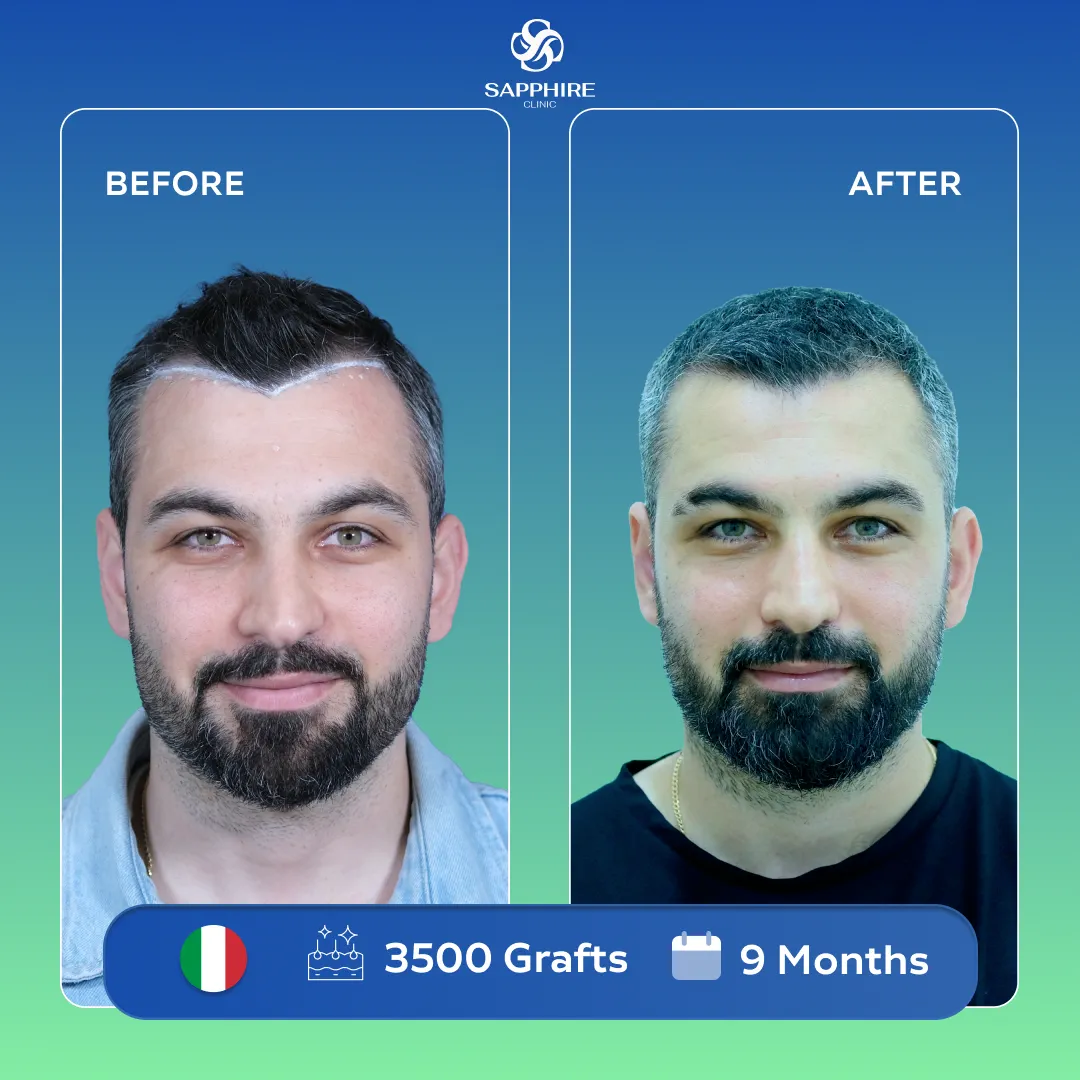
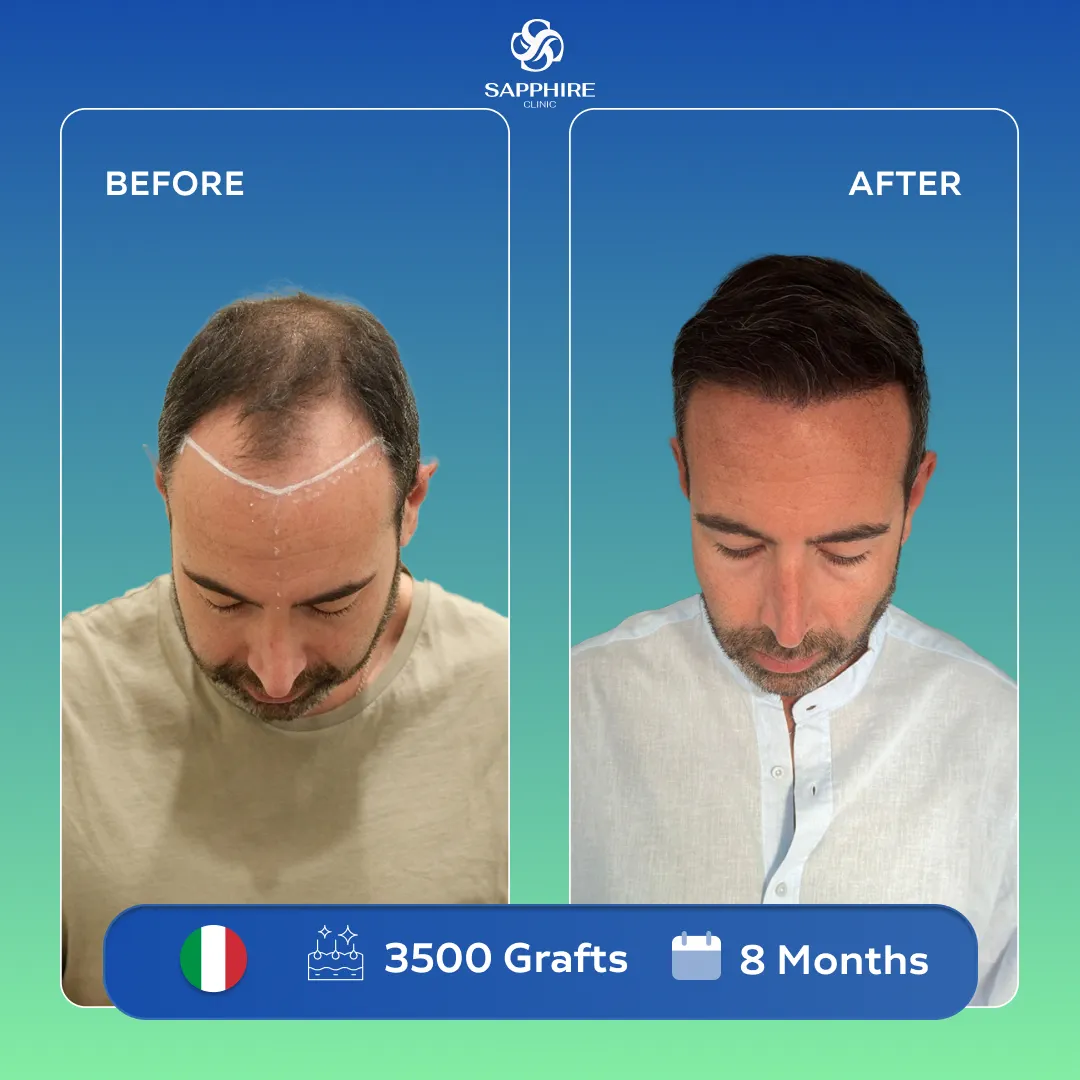
Realistic Expectations For Hair Transplant in Turkey Before After
Realistic expectations for hair transplant in Turkey before and after include gradual growth, natural density, and visible results within 6 to 12 months. After the procedure, transplanted hair typically sheds within the first few weeks, which is a normal part of the process. New hair growth usually begins around the third month and continues to improve over time. By six months, patients notice clearer density, while full results appear between nine and twelve months. The final outcome depends on factors like graft quality and scalp condition. As a result, setting realistic expectations ensures satisfaction with natural-looking before and after hair transplant results in Turkey.
Hair Transplant Results For Month by Month
Hair transplant results develop gradually, with visible changes each month as new hair grows and thickens. Understanding the month-by-month timeline helps set realistic expectations and improves satisfaction with the final outcome.
- Month 1 – Healing Phase: In the first month after a hair transplant, the scalp heals and redness or scabbing fades. Transplanted hairs may still be visible, but the focus is on recovery, not growth.
- Month 2 – Shedding Phase (Shock Loss): Around the second month, most transplanted hairs fall out. This is completely normal and part of the process known as “shock loss.” The roots remain intact under the skin.
- Month 3 – Dormant Phase: Hair growth is minimal during this stage. The follicles are resting beneath the scalp, preparing to produce new hair strands.
- Month 4 – Early Growth Begins: New hair starts to grow, but it appears thin and soft. This is the first visible sign that the transplant is working.
- Month 5–6 – Noticeable Growth: Hair becomes more noticeable and begins to thicken. Coverage improves, though it may still look uneven.
- Month 7–9 – Significant Improvement: Hair density increases significantly. The hairline becomes more defined, and overall appearance improves.
- Month 10–12 – Final Results: By one year, most patients see full results. Hair looks natural, thicker, and fully integrated with existing hair.
Factors Affecting Hair Transplant Before and After Results
Several key factors affecting hair transplant before and after results include donor hair quality, surgeon expertise, technique used, and post-operative care. Donor hair density and strength directly influence how well transplanted grafts survive and grow. The surgeon’s experience also plays a critical role in creating a natural hairline and proper graft placement. Additionally, the chosen method, such as DHI or FUE, impacts healing time and overall density. Proper aftercare, including following medical instructions and avoiding damage to grafts, supports healthy growth. As a result, these combined factors determine the success and natural appearance of hair transplant before and after results.
How to Judge Hair Transplant Before After Photos Properly?
If you want to compare clinics, train your eye to look beyond the wow factor. Use a simple checklist.
- Check consistency: Same lighting, same hair length, same angles. Uncontrolled lighting can exaggerate density.
- Look at hairline detail: A natural hairline has micro-irregularity and soft transitions. A straight, sharp edge often looks unnatural over time.
- Review temple work: Temple points demand precise angles. Good temple restoration looks subtle, not aggressive.
- Look for crown honesty:Many galleries avoid crowns because crowns need realistic expectations. A trustworthy clinic shows crown outcomes with clear timelines.
- Ask about the timeline shown: A 3 month photo does not represent final results. A 12 month photo provides a more reliable benchmark.
When Should I Compare Before and After Photos To My Own Progress?
You should compare before and after photos to your own progress after at least 6 to 12 months post-transplant. During the first few months, transplanted hair sheds and new growth begins slowly, which can be misleading. Around the third month, early regrowth starts, but density remains low and uneven. By the sixth month, noticeable improvements appear, making comparisons more meaningful. Full results typically develop between nine and twelve months, when hair thickens and the final shape becomes clear.
Why Before and After Photos Matter?
Before and after hair transplant photos do more than show density. They reveal whether the hairline suits the face, whether the direction of growth looks natural, and whether the result holds up under different angles. A strong set of images helps you predict how the work will look when you walk into daylight, sit under office lighting, or style your hair casually at home.
What Creates a Natural Before After Hair Transplant in Turkey Result?
Natural outcomes start with donor quality and disciplined graft management. The donor area, usually the back and sides of the scalp, supplies the grafts that the surgeon can safely move. If the donor density is strong and the hair shafts are thick, the same number of grafts can produce fuller-looking coverage than it would for a patient with fine hair and high scalp contrast.
What Before After Photos Do Not Always Explain?
Graft count is easy to market, but it does not tell the full story. The visual impact depends on where the clinic places grafts and how it balances density across the scalp. A high graft count spread too thin can look weaker than a moderate graft count placed strategically in the frontal zone.
Hidden Side of Before After Success
Most before and after photos focus on the recipient area, but donor management determines long-term options. Overharvesting can thin the donor area and create visible patchiness, especially for patients who like short hairstyles. Strong clinics plan extraction patterns that preserve the donor’s visual uniformity and protect future flexibility.